Terrum Solidus
“The Solid Earth” / “The Foundation” / “The World That Was”
Period: Ancient past to ~-300 S.
Meaning: “Solid Earth” (from Old Luminar)
World: Unified landmass, stable ground, normal
physics
Legacy: The foundation upon which all human
civilization was built
“Terrum Solidus is myth to us. Ground that didn’t move. World that stayed put. We can’t imagine it. We inherit its ruins anyway.”
Quick Reference
|| Attribute | Details | ||———–|———| || Timespan | Unknown beginning to ~-300 S. | || World Type | Unified landmass (solid, stable, unmoving) | || Physics | Normal (gravity down, ground solid, sky blue) | || Population | Unknown (millions by end period) | || Technology | Primitive to Pre-Industrial | || Records | Almost none (pre-systematic documentation) | || End | Gradual transition to Apogee (~-300 S.) | || Significance | Foundation of all human history |
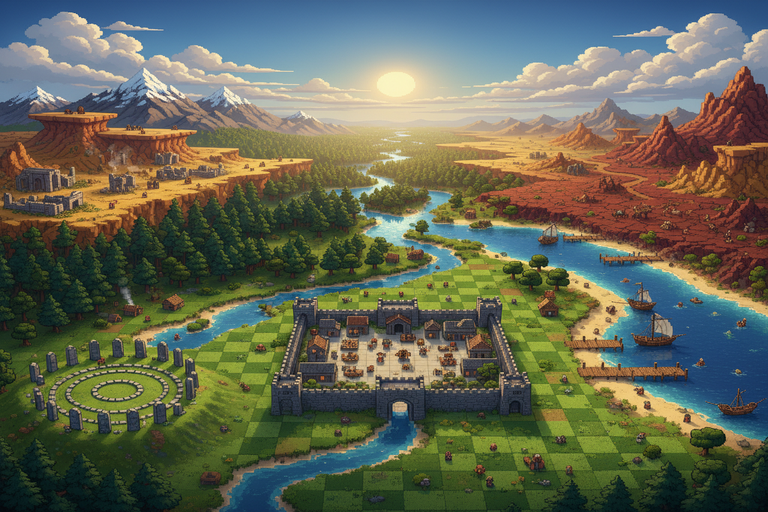 Terrum Solidus - The
Ancient World
Terrum Solidus - The
Ancient World
Overview
Terrum Solidus—“Solid Earth” in the Old Luminar tongue—refers to the ancient world before the Apogee, before advanced civilization, before humanity reached for the stars and broke everything. It encompasses millennia of human history, from the earliest tribal societies to the sophisticated pre-Apogee cultures that laid the groundwork for the Luminar Council’s eventual rise.
For modern Aetherium inhabitants, Terrum Solidus is more mythology than history. No records survive from most of this period. What we know comes from archaeology—ruins beneath ruins, artifacts buried in island fragments, fragmentary texts preserved by chance. The Archivists piece together what they can, but gaps are vast.
What makes Terrum Solidus significant isn’t what we know about it, but what it represents: stability. Ground that didn’t float. Gravity that pulled consistently downward. A world where if you built something, it stayed where you built it. Where walking didn’t risk falling into infinite void. Where the sky was blue, not luminous emptiness.
Modern Aetherium children hear stories about Terrum Solidus and can’t comprehend it. “Ground that doesn’t move? How is that possible?” To them, the floating islands are normal. Solid ground is fantasy.
But ruins prove it existed. Fragments of roads that once connected cities now float disconnected in the void. Foundations of buildings designed for stable earth, now tilted at impossible angles. Irrigation systems that assumed water would flow downhill, now frozen in mid-air.
Terrum Solidus was real. And humanity lived there for longer than we’ve lived in the Aetherium. That ancient world shaped everything that followed—our cultures, our languages, our dreams, our hubris.
Geography of the Ancient World
The Unified Landmass
Configuration: Scholars debate whether Terrum Solidus was: - A single supercontinent (all land connected) - Multiple continents with land bridges (connected but distinct) - An archipelago of large islands (connected by shallow seas)
Evidence: Fragmentary maps suggest interconnected landmass
Size: Vast (millions of square kilometers)
Stability: Completely stable - Ground didn’t move (no floating) - Mountains stayed in place (permanent) - Coastlines fixed (no drift) - Geography predictable (could make reliable maps)
Major Regions (Reconstructed)
The Northern Reaches: - Geography: Mountains, forests, tundra - Climate: Cold (winters harsh, summers brief) - Peoples: Mountain clans, forest tribes - Resources: Timber, stone, furs - Legacy: Veil-Born culture descended from here - Modern Fragments: Veiled Heights islands (possibly)
The Central Plains: - Geography: Fertile flatlands, rivers, grasslands - Climate: Temperate (four distinct seasons) - Peoples: Agricultural societies, early city-states - Resources: Grain, livestock, water - Legacy: Bright-Folk culture descended from here - Modern Fragments: Bright Reaches islands (possibly)
The Southern Coasts: - Geography: Warm seas, beaches, tropical forests - Climate: Hot (minimal seasonal variation) - Peoples: Fishing cultures, maritime traders - Resources: Fish, exotic woods, spices - Legacy: Sun-Touched culture descended from here - Modern Fragments: Scattered (many consumed by Rot)
The Eastern Highlands: - Geography: Plateaus, canyons, ancient ruins - Climate: Arid (deserts, scrublands) - Peoples: Nomadic tribes, warrior cultures - Resources: Minerals, rare metals, mysterious artifacts - Legacy: Iron-Blood culture descended from here - Modern Fragments: Ironhold plateau (built on ruins)
The Western Wastes: - Geography: Deserts, badlands, volcanic regions - Climate: Extreme (scorching days, freezing nights) - Peoples: Nomads, hermits, exiles - Resources: Rare minerals, obsidian, salt - Legacy: Largely lost (few descendants) - Modern Fragments: Unknown (possibly Periphery)
Natural Features
Oceans: Vast bodies of liquid water - Not Aether (actual H₂O) - Waves, tides, currents - Marine life (fish, whales, creatures) - Sailing ships (pre-airship travel) - Most water lost in Shattering (evaporated into Aether?)
Mountains: Permanent, unmoving peaks - Highest: Mount Luminar (8,000+ meters) - Formed by geological processes (not floating) - Snow-capped, dangerous, majestic - Fragments now float as islands (mountains became sky-islands)
Rivers: Flowing water connecting regions - Gravity-fed (flowed downhill) - Transportation routes (boats, rafts) - Irrigation sources (agriculture) - Settlement locations (cities on rivers) - Now frozen or evaporated (fragments show dry riverbeds)
Forests: Dense vegetation - Ironwood trees originated here - Diverse ecosystems (countless species) - Resources (timber, food, medicine) - Habitats (animals, peoples) - Fragments survive (but ecosystems collapsed)
Deserts: Arid regions - Harsh but stable - Nomadic peoples adapted - Rare resources (minerals, salt) - Spiritual significance (isolation, testing) - Fragments now float (sand drifts into Aether)
Climate and Weather
Seasons: Predictable cycles - Spring: Warming, growth, renewal - Summer: Hot, abundant, productive - Autumn: Cooling, harvest, preparation - Winter: Cold, dormant, survival - Annual cycle (reliable, plannable)
Weather Patterns: Understandable - Rain (from clouds, not Aether-moisture) - Snow (frozen water, not Rot-crystals) - Wind (atmospheric, not Aether-currents) - Storms (dangerous but predictable) - No Aether-Storms (those came later)
Temperature: Varied by region - Tropical: Hot year-round - Temperate: Moderate with seasons - Arctic: Cold year-round - Extreme ranges (from -50°C to +50°C) - Humans adapted to all climates
The Shattering’s Impact on Geography
What Happened: - Terrum Solidus broke into thousands of fragments - Fragments cast into Aether (new medium) - Oceans evaporated or fell away - Rivers froze or drained - Ecosystems collapsed - Geography became unpredictable (islands drift)
What Remains: - Island fragments (pieces of continents) - Ruins (cities, roads, monuments) - Fossils (ancient life preserved) - Geological evidence (rock formations, strata) - Enough to reconstruct (partially)
What’s Lost: - Complete maps (fragmentary only) - Most landmass (90%+ gone or inaccessible) - Oceans (water mostly lost) - Ecosystems (species extinct) - The experience of solid ground (no one alive remembers)
Civilization Development
Early Period (Timeline Unknown)
Hunter-Gatherers: First humans - Small bands (20-50 people) - Nomadic (followed food sources) - Stone tools (primitive but effective) - Oral traditions (no writing) - Survival-focused (harsh life)
Social Structure: Egalitarian - No formal hierarchy (elders respected) - Gender roles flexible (survival mattered) - Communal resources (shared food) - Kinship bonds (family groups)
Spirituality: Animistic - Nature worship (spirits in everything) - Shamans (spiritual leaders) - Rituals (hunting, fertility, death) - No organized religion (yet)
Evidence: Stone tools, cave paintings, burial sites
Agricultural Revolution (Date Unknown, ~-5000 S.?)
Breakthrough: Farming discovered - Domesticated plants (grains, vegetables) - Domesticated animals (livestock) - Permanent settlements (villages) - Population growth (food surplus) - Specialization (not everyone farms)
Social Changes: Hierarchies emerged - Leaders (organizers, decision-makers) - Warriors (defenders, conquerors) - Priests (spiritual authorities) - Craftspeople (specialists) - Farmers (majority)
Technology: Advanced - Pottery (storage, cooking) - Weaving (clothing, textiles) - Metallurgy (copper, bronze) - Architecture (permanent buildings) - Writing (record-keeping)
Impact: Civilization began - Villages became towns - Towns became cities - Cities became empires - Complexity increased - History accelerated
Classical Period (Fragmentary Records, ~-3000 S. to -500 S.?)
City-States: Independent polities - Walled cities (defense) - Surrounding farmland (food) - Trade networks (resources) - Cultural identity (distinct) - Frequent warfare (competition)
Empires: Conquest and unification - Powerful city-states conquered neighbors - Multi-city empires formed - Centralized government (bureaucracy) - Cultural exchange (forced or voluntary) - Rise and fall (cycles of power)
Technology: Advancing - Iron metallurgy (stronger tools, weapons) - Advanced architecture (temples, palaces) - Sailing ships (maritime trade) - Mathematics (geometry, arithmetic) - Philosophy (questioning reality)
Culture: Flourishing - Literature (epics, poetry, drama) - Art (sculpture, painting, mosaics) - Music (instruments, compositions) - Religion (organized, complex) - Science (astronomy, medicine, engineering)
Evidence: Ruins of cities, fragmentary texts, artifacts
Notable Civilizations (names reconstructed): - The Northern Kingdoms: Mountain fortress-cities - The River Empires: Agricultural powerhouses - The Maritime Alliance: Coastal trading network - The Eastern Confederacy: Warrior cultures - The Desert Caliphate: Spiritual center
Conflicts: Constant - Resource wars (water, land, minerals) - Religious wars (competing beliefs) - Territorial wars (expansion, defense) - Trade wars (economic competition) - Cycles of peace and violence
Pre-Apogee Period (~-500 S. to -300 S.)
Technological Acceleration: Rapid advancement - Printing (mass communication) - Advanced metallurgy (steel, alloys) - Early industrialization (factories, machines) - Global trade (interconnected economies) - Scientific method (systematic inquiry)
Population Explosion: Millions - Better agriculture (more food) - Better medicine (less death) - Urbanization (cities growing) - Migration (people moving) - Strain on resources (limits approaching)
Global Communication: Emerging - Faster ships (maritime networks) - Postal systems (written messages) - Telegraph equivalents (early instant communication) - Shared languages (trade tongues) - Cultural exchange (ideas spreading)
Philosophical Shift: Questioning - What is reality? (metaphysics) - How should we live? (ethics) - What can we know? (epistemology) - Can we transcend limitations? (ambition) - These questions led to Astral Geometry discovery
The Transition: Gradual but inevitable - Technology reached threshold - Astral Geometry discovered (~-280 S.) - Luminar Council formed (~-300 S.) - Terrum Solidus became “the old world” - The Apogee became “the new world” - Humanity transformed
Culture and Society
Diversity of Peoples
Languages: Hundreds, possibly thousands - Regional languages (distinct) - Trade languages (simplified) - Sacred languages (religious texts) - Dead languages (ancient, forgotten) - Linguistic evolution (constant change)
Religions: Countless beliefs - Polytheistic: Multiple gods (nature, war, love, death) - Monotheistic: Single god (creator, judge, sustainer) - Animistic: Spirits everywhere (nature worship) - Philosophical: No gods (ethics without divinity) - Syncretic: Mixed traditions (cultural blending)
Governments: Varied systems - Monarchies: Kings, queens, hereditary rule - Republics: Elected leaders, citizen participation - Theocracies: Religious authorities govern - Oligarchies: Elite minority rules - Tribal Councils: Elder consensus
Values: Different priorities - Warrior Cultures: Honor, strength, courage, conquest - Merchant Cultures: Wealth, trade, negotiation, prosperity - Scholar Cultures: Knowledge, wisdom, learning, teaching - Agricultural Cultures: Community, tradition, stability, harvest - Nomadic Cultures: Freedom, adaptation, survival, movement
Unity and Conflict
Trade: Connected regions - Silk roads (overland routes) - Maritime routes (sea trade) - River networks (internal trade) - Caravans (desert crossings) - Economic interdependence
War: Divided peoples - Territorial disputes (borders) - Resource competition (water, land, minerals) - Religious conflicts (competing truths) - Cultural clashes (different values) - Cycles of violence
Cultural Exchange: Gradual blending - Intermarriage (families mixing) - Migration (peoples moving) - Conquest (forced integration) - Trade (ideas traveling with goods) - Slow homogenization
No Global Unity: Until Luminar Council - Regional powers (empires) - Competing civilizations (rivals) - Isolated peoples (unknown to each other) - First truly global government came with Apogee - Terrum Solidus was fragmented (politically, culturally)
Daily Life in Terrum Solidus
Morning: Wake with sun - Natural light (no electric) - Manual labor (no automation) - Simple meals (bread, porridge, local food) - Family routines (communal living)
Work: Physical, demanding - Farming (majority of population) - Crafts (blacksmiths, weavers, potters) - Trade (merchants, sailors) - Warfare (soldiers, guards) - Scholarship (minority, privileged)
Evening: Community and rest - Shared meals (social bonding) - Storytelling (oral tradition) - Music (instruments, singing) - Early sleep (no artificial light) - Simple pleasures
Challenges: Constant - Disease (no modern medicine) - Hunger (crop failures, famines) - War (violence, displacement) - Natural disasters (earthquakes, floods, storms) - Short lifespans (30-50 years average)
Compared to Apogee: Harsh - No instant communication - No advanced medicine - No automation - No global coordination - But: Stable ground, predictable world
Compared to Aetherium: Different - Harder in some ways (disease, hunger) - Easier in others (no Rot, no falls, no Aether-Storms) - More people (millions vs. thousands) - More resources (continents vs. fragments) - More stability (ground didn’t move)
Technology
Terrum Solidus Technology (Reconstructed)
Stone Age: Earliest tools - Flint knapping (sharp edges) - Spears, axes, knives - Fire (cooking, warmth, protection) - Clothing (animal hides) - Shelters (caves, simple structures)
Bronze Age: First metals - Copper and tin alloys - Stronger tools and weapons - Trade (tin was rare, required networks) - Social stratification (metalworkers valued) - Warfare advanced
Iron Age: Superior metallurgy - Iron smelting (more abundant than bronze) - Steel (carbon-iron alloys) - Plows (better agriculture) - Weapons (swords, armor) - Construction (iron reinforcement)
Classical Technology: Sophisticated - Architecture (stone buildings, arches, domes) - Engineering (aqueducts, roads, bridges) - Maritime (sailing ships, navigation) - Agriculture (irrigation, crop rotation) - Medicine (surgery, herbal remedies)
Pre-Apogee Technology: Advanced - Printing (mass communication) - Factories (early industrialization) - Steam power (mechanical energy) - Precision tools (advanced manufacturing) - Scientific instruments (telescopes, microscopes)
Limitations: No Astral Geometry - Couldn’t communicate with constellations (yet) - Couldn’t manipulate reality (yet) - Couldn’t achieve instant communication (yet) - Bound by normal physics (for now) - These limitations ended with Apogee
Archaeological Evidence
Ruins: Everywhere in Aetherium - Pre-Apogee structures (beneath Apogee ruins) - Terrum Solidus foundations (oldest layers) - Stone circles (ancient observatories?) - Burial mounds (ancestral graves) - Fortifications (ancient wars)
Artifacts: Scattered - Stone tools (oldest) - Bronze weapons (middle period) - Iron implements (later period) - Pottery shards (everyday life) - Jewelry (art, status, trade)
Texts: Almost none - Writing systems existed (evidence in ruins) - Materials degraded (papyrus, parchment rotted) - Shattering destroyed most (catastrophic loss) - Fragments survive (precious few) - Oral tradition preserves some (unreliable)
Reconstruction Challenges: - Most evidence lost (Shattering destroyed) - What remains is fragmentary (incomplete picture) - Interpretation difficult (context missing) - Debates ongoing (scholars disagree) - Gaps vast (more unknown than known)
The Transition to Apogee
How It Happened (~-300 S.)
Technological Threshold: Critical mass reached - Science advanced sufficiently - Mathematics sophisticated enough - Astronomy detailed enough - Philosophy questioning enough - Ready for breakthrough
The Discovery: Astral Geometry (~-280 S.) - Constellations are conscious (revelation) - Can be communicated with (breakthrough) - Respond to precise geometry and mathematics (method) - Grant blessings and knowledge (power) - Everything changed
The Formation: Luminar Council (~-300 S.) - Greatest minds gathered - Formed ruling council - Claimed authority through knowledge - Unified world (first time) - Apogee began
The Transformation: Society reorganized - Technocracy established (knowledge = power) - Global communication enabled (instant) - Resources coordinated (efficiency) - Culture homogenized (unity) - “Terrum Solidus” became historical term
The Speed: Rapid - Within one generation (30 years) - Terrum Solidus → Apogee - Ancient world → Modern world - Fragmented → Unified - Unprecedented transformation
Why It Matters
Foundation: Apogee built on Terrum Solidus - Millennia of development (slow accumulation) - Knowledge preserved (written, taught) - Infrastructure inherited (cities, roads, networks) - Cultures evolved (traditions, values) - Without Terrum Solidus, no Apogee
Contrast: Then vs. Now - Terrum Solidus: Stable, slow, fragmented - Apogee: Advanced, fast, unified - Aetherium: Broken, desperate, scattered - Each era shaped by what came before
Memory: Cultural inheritance - Modern Aetherium peoples descended from Terrum Solidus cultures - Languages evolved from Terrum Solidus tongues - Values inherited from ancient traditions - Even 287 years after Shattering, echoes remain
Warning: Stability isn’t permanent - Terrum Solidus seemed eternal (lasted millennia) - Apogee seemed invincible (lasted centuries) - Both ended (catastrophically) - Aetherium might end too - Nothing is permanent
In-World Documents
Archivist’s Reconstruction (Year 245 S.)
Subject: Terrum Solidus Geography
Method: Analyzing island fragment distribution, geological evidence, and fragmentary maps
Findings: Terrum Solidus was likely a single supercontinent with five major regions: - Northern mountains (cold, forested) - Central plains (temperate, fertile) - Southern coasts (warm, maritime) - Eastern highlands (arid, mineral-rich) - Western wastes (extreme, harsh)
Evidence: - Island fragments cluster by geological type - Cultural similarities within regions - Trade route patterns (reconstructed) - Linguistic relationships (analyzed)
Confidence: Moderate (40-60% certain)
Gaps: Vast. We’re reconstructing a world from fragments. Like assembling a puzzle with 90% of pieces missing.
Recommendation: Continue research. Every artifact helps. Every ruin tells a story. Terrum Solidus shaped everything that followed. Understanding it helps us understand ourselves.
—Chief Archivist Theron Bookbinder
Fragment from “The Ancient Chronicles” (Pre-Apogee Text, ~-400 S.)
Year 47 of King Theron’s Reign
The harvest was bountiful. The granaries overflow. The people prosper.
To the north, the Mountain Kingdoms war among themselves. Let them. Our walls are strong.
To the south, the Maritime Alliance grows wealthy on trade. We benefit. Their ships bring exotic goods.
To the east, the Desert Caliphate preaches their faith. We tolerate. Belief is personal.
To the west, the Wastes remain empty. None venture there. Death awaits.
Our kingdom endures. The ground is solid. The sky is clear. The gods favor us.
May it always be so.
[Note: Kingdom fell to plague 20 years later. City ruins now float as island fragment near Skyport Eos.]
Children’s Story (Origin: Terrum Solidus, Preserved Orally)
Long ago, when the world was whole, there lived a girl who could speak to stones.
She would press her ear to the ground and hear the earth’s heartbeat. Deep and slow. Eternal.
“The ground will always hold you,” the stones told her. “We are forever.”
She believed them. Everyone believed them.
Then the world broke. The ground shattered. The stones fell silent.
The girl survived. She floated on a fragment, listening.
But the stones never spoke again.
Moral: Nothing is forever. Not even the ground beneath your feet.
[Note: Story still told to Aetherium children. Teaches caution near island edges.]
Archaeological Report (Year 278 S.)
Site: Fragment 47-B (designation) Location: Periphery (drift pattern suggests origin: Western Wastes) Findings: Pre-Apogee settlement, possibly 2000+ years old
Structures: - Stone circle (astronomical observatory?) - Burial mounds (30+ graves) - Foundations (wooden buildings, long rotted) - Fire pits (communal gathering spaces)
Artifacts: - Stone tools (flint, obsidian) - Pottery shards (geometric patterns) - Bronze jewelry (trade goods—not local) - Bones (human, animal)
Interpretation: Small tribal settlement, Terrum Solidus era. Practiced astronomy (stone circle). Traded with distant peoples (bronze). Buried dead with care (grave goods present).
Significance: Proves human habitation millennia before Apogee. Terrum Solidus civilization was widespread, sophisticated, and ancient.
Personal Note: Standing in those ruins, I felt connection to ancestors I’ll never know. They lived, loved, died on solid ground. They thought their world was eternal.
They were wrong. So might we be.
—Archaeologist Mara Stonefinder
Old Song (Origin: Terrum Solidus, Still Sung)
When the world was whole and wide,
When the ground was firm and true,
When the mountains touched the sky,
And the oceans were deep blue,We walked without fear of falling,
We built without fear of drifting,
We lived without fear of ending,
We dreamed without fear of shattering.But the world broke, and we fell,
And the ground gave way beneath,
And the mountains float like dust,
And the oceans are just memory.Still we sing of what once was,
Still we dream of solid earth,
Still we hope to walk again,
On ground that knows its worth.
Philosopher’s Reflection (Year 260 S.)
Question: What is Terrum Solidus to us?
Answer: Mythology. Foundation. Warning.
Mythology: We tell stories about solid ground like ancient peoples told stories about gods. “Once, the world didn’t float.” Children can’t imagine it. Adults barely remember the concept. It’s become legend.
Foundation: Everything we are comes from Terrum Solidus. Our languages, cultures, values, knowledge—all inherited from that ancient world. We’re not separate from it. We’re its continuation, transformed by catastrophe.
Warning: Terrum Solidus lasted millennia. It seemed eternal. Then it ended in eight days. Nothing is permanent. Not ground. Not civilization. Not us.
Conclusion: Terrum Solidus is the world we lost, the foundation we stand on, and the reminder that everything ends.
We inherit its ruins. We honor its memory. We learn its lesson: Build well, but don’t assume forever.
—Philosopher Kael Thoughtweaver
Quest Hooks
The Ancient Ruins: Discover Terrum Solidus-era settlement on remote island fragment. Older than Apogee, possibly 2000+ years old. What secrets do the ruins hold? What can we learn from our distant ancestors?
The Stone Circle: Find intact astronomical observatory from Terrum Solidus period. Stone circle aligned with pre-Shattering constellations. Study it. What did ancient peoples know about the stars? Did they predict the Shattering?
The Burial Mound: Uncover ancient grave with unusual artifacts. Jewelry, tools, texts (possibly). Archaeologists want to study it. Descendants want to honor it. Looters want to rob it. What do you do?
The Lost Language: Find texts in unknown language (pre-Apogee, Terrum Solidus era). Archivists desperate to translate. Could reveal lost knowledge. Could be dangerous. Help translate or destroy?
The Reconstruction Project: Scholars attempting to create complete map of Terrum Solidus. Need data from dangerous locations (Periphery, Deeps, Murk). Help gather evidence. Risk your life for ancient geography?
The Cultural Connection: Meet people claiming descent from specific Terrum Solidus culture. They preserve ancient traditions (language, customs, beliefs). Document their culture before it’s lost. Or help them revive it?
The Ancient Artifact: Find Terrum Solidus-era object (pre-Astral Geometry, pre-Apogee). Simple but beautiful. Museum wants it. Descendants want it returned. Private collector offers fortune. Who gets it?
The Geological Mystery: Island fragment has unusual geology (doesn’t match known regions). Where did it come from? Unknown part of Terrum Solidus? Investigate. Discover new information about ancient world.
The Time Capsule: Find sealed container from Terrum Solidus era. Intentional preservation (messages to future). Open it. Read messages from people who lived millennia ago. What did they want us to know?
The Foundation: Discover that major settlement (Ironhold? Eos?) is built on significant Terrum Solidus ruins. Excavation could reveal important history—but would destabilize current structures. Dig or preserve?
Related Topics
- Pre-Shattering Era - The complete history before the Shattering
- The Apogee - What came after Terrum Solidus
- Luminar Council - The rulers who ended Terrum Solidus era
- Culture - Peoples - Modern descendants of Terrum Solidus cultures
- The Archivists - Those who study Terrum Solidus
- Timeline - Complete chronology
“Terrum Solidus is myth to us. Ground that didn’t move. World
that stayed put. We can’t imagine it. We inherit its ruins
anyway.”
—Common saying
“They walked on solid earth for millennia. We’ve floated in void
for centuries. Which is normal? Neither. Both. Reality is what you’re
born into.”
—Philosopher’s observation
“Every island fragment was once part of Terrum Solidus. Every
ruin was once someone’s home. Every artifact was once someone’s
treasure. The ancient world is all around us, broken but not
forgotten.”
—Archivist’s reflection