Medicine & Healing
“Fighting Death & Corruption”
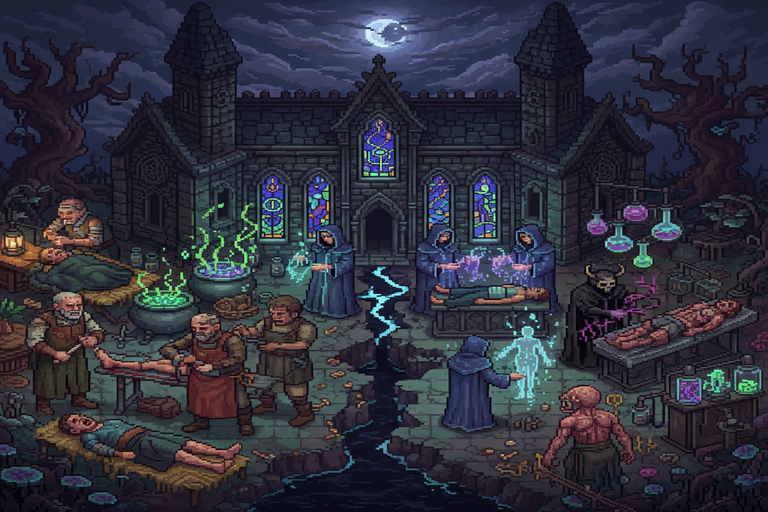 Medicine and Healing
in the Aetherium
Medicine and Healing
in the Aetherium
Table of Contents
- Medical Knowledge
- Healing Methods
- Healers
- Common Ailments
- Rot Treatment
- Surgery
- Public Health
- Limitations
- Pre-Shattering Knowledge
- Mental Health
- Cost
- Medicant Order
- Common Diseases and Treatments
- Medical Practitioners
- Surgical Procedures
- Alchemical Medicine
- Childbirth and Obstetrics
- Common Medical Practices
- Medical Facilities
- Diseases of the Aetherium
- Mental Health and Trauma
- Medical Ethics and Dilemmas
- In-World Documents
- Quest Hooks
- Related Topics
Medical Knowledge
Level: Medieval equivalent (practical experience-based) Theory: Limited understanding (no germ theory) Practice: Effective for trauma, poor for disease Training: Apprenticeship (healers), Clergy schools (priests)
Healing Methods
Physical Medicine
Wound Treatment: Cleaning, stitching, bandaging Bone-Setting: Splints, realignment (painful, often effective) Surgery: Limited (amputation, extraction, basic procedures) Anesthesia: Alcohol, herbs (pain management crude) Antiseptic: Boiled water, alcohol (instinctively clean, not understood why)
Herbal Remedies
Pain Relief: Star-blossom, murk-root derivatives Fever Reduction: Various plants (some effective, some placebo) Infection Fighting: Limited success (trial-and-error) Preventatives: Nutrition, rest (understood value)
Prayer Healing
Constellation Clergy: Combine prayer with practical medicine Success Rate: Variable (~10% beyond natural recovery) Belief Impact: Psychological benefit (real but not magical) Current Crisis: Divine silence makes prayers less effective (maybe)
Healers
Clergy Healers
Training: 5 years (medicine + theology) Approach: Prayer + practical medicine Notable: Priest Valeria (overworked), Medicant Order Free Services: For poor (charity mission)
Lay Healers
Training: Apprenticeship (family tradition often) Approach: Practical only (no prayer) Cost: Charge fees (survival necessity) Variable Skill: No standardization
Alchemists
Research: Experimental (Kael Greythorn leading) Approach: Chemical/scientific Controversial: Methods (ethically questionable sometimes) Success: Limited but real progress
Common Ailments
Treated Successfully: - Wounds, breaks, sprains - Some infections (if caught early) - Malnutrition (with food) - Parasites
Poorly Treated: - Disease (limited understanding) - Rot-corruption (only slowing, not curing) - Chronic conditions - Mental health
Rot Treatment
Stage 1: Compound Theta-7 (arrests progression temporarily) - Kael’s experimental treatment - Requires continuous dosing - Unavailable to most (resource constraints)
Stage 2+: No effective treatment - Palliative care only - Sister Morrigan’s acceptance philosophy alternative - Medicant Order provides comfort
Prevention: Avoidance best medicine
Surgery
Amputation: Common (infection, frostbite, Rot-localized) Extraction: Arrows, fragments, teeth C-Section: Attempted rarely (usually fatal) Anesthesia: Alcohol, sometimes void-lotus (risky) Survival: ~50% (skilled healer, good conditions)
Public Health
Sanitation: Basic (waste disposal, water sources) Quarantine: Standard (infectious disease, Rot-infected) Screening: Entry health checks (major settlements) Prevention: Limited understanding but some practices work
Limitations
No Antibiotics: Infection often fatal No Anesthesia: Surgery agonizing Limited Diagnosis: Can’t identify many conditions Resource Scarcity: Medicine expensive Knowledge Gaps: Fundamental ignorance about disease
Pre-Shattering Knowledge
Lost: Advanced medical technology Fragments: Archivists find occasional texts Incomplete: Can’t reconstruct techniques Aspiration: Returners hope to recover
Mental Health
Understanding: Limited (consider spiritual/moral issue) Treatment: Prayer, counsel, community support Stigma: Mental illness shameful Trauma: Common (war, loss, Rot-exposure) but unaddressed mostly
Cost
Clergy: Free or donation-based Lay Healers: 1-10 Coins (service-dependent) Alchemists: Expensive (experimental treatments) Materials: Additional costs (bandages, herbs, medicines)
Medicant Order
Philosophy: Heal without judgment (even Rot-Touched) Services: Free clinics, disaster response Controversial: Helping infected (Clergy disapproves) Compassionate: Fills gap orthodox won’t
Common Diseases and Treatments
Infectious Diseases
Aether-Fever (Most Common) - Symptoms: High fever, delirium, weakness, sweating - Cause: Unknown (possibly airborne pathogen) - Transmission: Person-to-person, especially in crowded settlements - Treatment: Rest, fluids, fever-reducing herbs, prayer - Mortality: 20% untreated, 10% with treatment - Prevention: Isolation of sick, basic hygiene - Notes: Epidemic every 3-5 years in major settlements
Void-Lung (Serious) - Symptoms: Coughing, difficulty breathing, blood in sputum - Cause: Prolonged Aether exposure (Aether-Sickness progression) - Transmission: Not contagious (environmental) - Treatment: Rest on solid island, clean air, prayer to Light - Mortality: 40% (often chronic, not acute) - Prevention: Limit time in deep Aether, use Aether-masks - Notes: Common among pilots, Sky-Striders, long-distance travelers
Rot-Pox (Rare but Terrifying) - Symptoms: Black pustules, fever, delirium, rapid corruption - Cause: Rot-infection variant (airborne) - Transmission: Highly contagious - Treatment: Quarantine, prayer, alchemical compounds (rarely effective) - Mortality: 80% (survivors often permanently corrupted) - Prevention: Avoid Rot-zones, immediate quarantine of infected - Notes: Outbreaks trigger panic, sometimes settlement abandonment
Bone-Wasting (Chronic) - Symptoms: Brittle bones, fractures, pain, deformity - Cause: Nutritional deficiency (lack of certain minerals) - Transmission: Not contagious (dietary) - Treatment: Improved diet (fish, certain plants), limited success - Mortality: Low directly, but complications kill - Prevention: Balanced diet (difficult in resource-scarce Aetherium) - Notes: Common among poor, elderly
Gut-Rot (Acute) - Symptoms: Severe diarrhea, vomiting, dehydration, fever - Cause: Contaminated food or water - Transmission: Consumption of tainted substances - Treatment: Fluids, rest, prayer, activated charcoal - Mortality: 30% (dehydration kills) - Prevention: Proper food storage, clean water - Notes: Kills more children than adults
Injuries and Trauma
Falls (Most Common Injury) - Types: Minor (bruises, sprains) to catastrophic (broken bones, internal bleeding) - Treatment: Splinting, surgery if necessary, rest, pain management - Mortality: Varies (minor falls: 0%, major falls: 60%) - Prevention: Tether-belts, railings, caution - Notes: Leading cause of death among children, drunk adults
Rot-Beast Attacks (Frequent in Frontier) - Injuries: Lacerations, bites, crush wounds, infection risk - Treatment: Wound cleaning, stitching, amputation if infected, prayer - Mortality: 30% (infection, blood loss, Rot-transmission) - Prevention: Weapons, guards, avoidance - Notes: Rot-Beast bites often transmit corruption (requires immediate treatment)
Airship Crashes (Catastrophic) - Injuries: Multiple trauma, burns, broken bones, internal injuries - Treatment: Triage (save who you can), surgery, prayer - Mortality: 70% (most die instantly, survivors often severely injured) - Prevention: Proper maintenance, skilled pilots, weather awareness - Notes: Crashes are rare but devastating (entire crews lost)
Childbirth Complications (Leading Cause of Female Mortality) - Issues: Breech birth, hemorrhage, infection, obstructed labor - Treatment: Midwifery (skilled but limited), prayer, sometimes surgery - Mortality: 15% maternal, 30% infant - Prevention: Prenatal care (limited), skilled midwives, prayer - Notes: Every birth is risk; families pray to Light and Forge
Burns (Common in Settlements) - Causes: Cooking fires, forge work, lightning strikes - Treatment: Cool water, salves, bandaging, prayer, pain management - Mortality: Depends on severity (minor: 0%, major: 60%) - Prevention: Caution, proper fire management - Notes: Burn scars common (badge of survival)
Mental Health Conditions
Aether-Sickness (Environmental) - Symptoms: Disorientation, memory loss, paranoia, sense of unreality - Cause: Prolonged Aether exposure (months without solid ground) - Treatment: Return to island, rest, community support, prayer - Mortality: Indirect (leads to accidents, suicide) - Prevention: Regular island landings, social connection - Notes: Affects pilots, nomads, explorers
Despair-Sickness (Psychological) - Symptoms: Hopelessness, loss of will, suicidal ideation - Cause: Trauma, loss, Rot-exposure, existential dread - Treatment: Community support, prayer to Light, purpose-finding - Mortality: High (suicide risk) - Prevention: Social bonds, meaning, hope-maintenance - Notes: Epidemic in post-Rot communities
Rot-Madness (Corruption-Induced) - Symptoms: Hearing voices, paranoia, personality changes, aggression - Cause: Early Rot-infection (Voice Beneath influence) - Treatment: Isolation, prayer, alchemical compounds (limited success) - Mortality: 100% eventually (progresses to full corruption) - Prevention: Avoid Rot-zones, immediate treatment of exposure - Notes: Terrifying to witness (person becomes stranger)
Battle-Shock (Trauma) - Symptoms: Flashbacks, nightmares, hypervigilance, emotional numbness - Cause: Combat, Rot-Beast encounters, witnessing death - Treatment: Time, community, purpose, prayer - Mortality: Indirect (substance abuse, suicide, recklessness) - Prevention: None (trauma is unavoidable in Aetherium) - Notes: Common among guards, hunters, survivors
Medical Practitioners
Types of Healers
Clergy Healers (Most Trusted) - Training: 5 years (3 years medicine, 2 years theology) - Location: Chapels, settlements, traveling missions - Approach: Prayer + practical medicine (holistic) - Cost: Free or donation-based (charity mission) - Specialties: Spiritual healing, Rot-resistance, hope-counseling - Notable Figures: Priest Valeria (Skyport Eos), Medicant Order members - Reputation: Trusted, compassionate, overworked - Limitations: Divine silence reduces prayer effectiveness
Lay Healers (Most Common) - Training: Apprenticeship (5-10 years with experienced healer) - Location: Every settlement has at least one - Approach: Practical medicine only (no prayer) - Cost: 1-10 Aether-Coins per service (varies by complexity) - Specialties: Wound treatment, bone-setting, childbirth, herbal remedies - Notable Figures: Old Marna (Skyport Eos), Healer Dara (Windmere) - Reputation: Variable (skill ranges from excellent to dangerous) - Limitations: No formal standards, knowledge gaps
Alchemists (Experimental) - Training: Self-taught or apprenticed (no formal system) - Location: Glimmering Spire, hidden labs, private practices - Approach: Chemical/scientific experimentation - Cost: Expensive (10-100 Coins for experimental treatments) - Specialties: Rot-treatment, poison antidotes, enhancement compounds - Notable Figures: Alchemist Kael Greythorn (leading researcher) - Reputation: Controversial (methods ethically questionable, results undeniable) - Limitations: Expensive, dangerous, often illegal
Midwives (Specialized) - Training: Apprenticeship (10+ years with experienced midwife) - Location: Every settlement (essential service) - Approach: Practical obstetrics, prayer to Forge (strength) and Light (hope) - Cost: 5-20 Coins per birth (sliding scale based on family wealth) - Specialties: Childbirth, prenatal care, infant care, women’s health - Notable Figures: Midwife Kara (Ironhold, delivered 500+ babies) - Reputation: Revered (bring life into dying world) - Limitations: High maternal/infant mortality despite skill
Surgeons (Rare) - Training: Apprenticeship + natural talent (not everyone can handle it) - Location: Major settlements only (Eos, Ironhold) - Approach: Invasive procedures (amputation, extraction, emergency surgery) - Cost: 20-50 Coins (major surgery) - Specialties: Trauma surgery, amputation, emergency procedures - Notable Figures: Surgeon Vask (Ironhold, former military medic) - Reputation: Respected and feared (last resort) - Limitations: No anesthesia, high mortality, agonizing for patients
Bone-Setters (Common) - Training: Apprenticeship (3-5 years) - Location: Every settlement - Approach: Fracture treatment, joint manipulation, physical therapy - Cost: 2-5 Coins per treatment - Specialties: Broken bones, dislocations, chronic pain - Reputation: Essential (falls are common) - Limitations: Can’t fix everything (some breaks don’t heal)
Herbalists (Traditional) - Training: Family tradition (knowledge passed down) - Location: Rural areas, Outland settlements - Approach: Plant-based remedies (traditional medicine) - Cost: Cheap (1-3 Coins) or barter - Specialties: Common ailments, preventative care, folk remedies - Reputation: Mixed (some effective, some placebo, some dangerous) - Limitations: No standardization, variable effectiveness
The Medicant Order
Founded: Year 189 S. (by Brother Caelum the Elder, not to be confused with current Brother Caelum)
Philosophy: “Heal all, judge none” - Treat everyone regardless of corruption status, faction, ability to pay - Medicine is sacred duty, not commodity - Compassion over dogma - Controversial but necessary
Structure: - Abbot Silas: Current leader (Drifting Sanctuary) - Medicants: 50+ members across Aetherium - Novices: In training (2-year program) - Lay Supporters: Donate, volunteer, provide resources
Services: - Free clinics (weekly in major settlements) - Disaster response (Rot-outbreaks, crashes, catastrophes) - Traveling healers (visit remote settlements) - Rot-Touched care (palliative, no judgment) - Training (teach basic medicine to communities)
Funding: Donations, wealthy patrons, some Guild support
Controversy: - Orthodox Clergy disapproves (helping Rot-Touched enables corruption) - Some settlements ban them (Ironhold: illegal to treat infected) - Others welcome them (Eos: tolerated, Murky Chasm: celebrated)
Reputation: Saintly or naive (depending on who you ask)
Notable Work: Saved hundreds during Thornspire evacuation (Year 227 S.)
Surgical Procedures
Common Surgeries
Amputation (Most Frequent) - Indications: Gangrene, severe infection, localized Rot, crush injuries - Procedure: Saw through bone, cauterize vessels, stitch skin flap - Anesthesia: Alcohol (patient drinks until unconscious), void-lotus (risky—can kill) - Duration: 30-60 minutes - Survival Rate: 50% (infection, blood loss, shock kill half) - Recovery: 6-8 weeks (if survives) - Cost: 30-50 Coins (major surgery) - Notes: Amputees common (wooden prosthetics, hooks, crutches)
Arrow/Projectile Extraction - Indications: Combat injuries, hunting accidents, Rot-Beast quills - Procedure: Cut around projectile, extract carefully, clean wound, stitch - Anesthesia: Usually none (too minor for precious anesthetics) - Duration: 15-30 minutes - Survival Rate: 80% (if no vital organs hit) - Recovery: 2-4 weeks - Cost: 10-20 Coins - Notes: “Bite leather, drink whiskey, pray to Forge”
Tooth Extraction - Indications: Infection, decay, pain - Procedure: Pliers, pull hard, pack socket - Anesthesia: Alcohol, sometimes clove oil (numbing) - Duration: 5-10 minutes (feels longer) - Survival Rate: 95% (infection risk) - Recovery: 1-2 weeks - Cost: 1-3 Coins - Notes: Most adults missing teeth by age 40
Cesarean Section (Desperate Measure) - Indications: Obstructed labor, mother/baby dying - Procedure: Abdominal incision, extract baby, attempt to close - Anesthesia: None (emergency procedure, no time) - Duration: 20-40 minutes - Survival Rate: 10% maternal, 30% infant (usually both die) - Recovery: Months (if survives) - Cost: 50+ Coins (desperate families pay anything) - Notes: Last resort (almost always fatal to mother)
Trepanation (Rare, Controversial) - Indications: Head trauma, pressure relief, “madness” (medieval belief) - Procedure: Drill hole in skull, relieve pressure - Anesthesia: Alcohol, prayer - Duration: 1-2 hours - Survival Rate: 30% (infection, brain damage) - Recovery: Variable (many never fully recover) - Cost: 40-60 Coins - Notes: Controversial (many consider it butchery, some swear it works)
Surgical Tools
Saws: Bone-cutting (amputation) - Iron or steel - Sharpened regularly - Sterilized (boiled water, alcohol) - Terrifying to patients
Scalpels: Precision cutting - Small, sharp blades - Various sizes - Expensive (good steel) - Surgeon’s most valued tool
Forceps: Extraction, clamping - Gripping instruments - Used for projectile removal, childbirth - Multiple types (different purposes)
Needles and Thread: Stitching - Bone needles, metal needles - Thread: Gut, silk, plant fiber - Sterilization critical (infection risk)
Cautery Irons: Vessel sealing - Heated metal rods - Stop bleeding (burn vessels closed) - Agonizing but effective - Always kept ready during surgery
Clamps and Retractors: Holding - Keep wounds open during surgery - Prevent bleeding - Crude but functional
Bone Saws and Chisels: Orthopedic - Setting complex fractures - Removing bone fragments - Specialized tools (expensive)
Alchemical Medicine
Healing Compounds
Compound Theta-7 (Rot-Arresting Agent) - Effect: Slows Rot progression (Stage 1 only) - Ingredients: Void-lotus extract, star-dust, purified Aether-water, secret catalyst - Preparation: 3 days (complex process) - Dosage: Daily (must continue indefinitely) - Cost: 50 Coins per dose (prohibitively expensive) - Availability: Extremely limited (Kael produces ~10 doses per month) - Side Effects: Nausea, hallucinations, dependency - Effectiveness: 70% success rate (arrests progression, doesn’t reverse) - Notes: Gives Rot-infected time (months to years), not cure
Phoenix Ash Tincture (Wound Healing) - Effect: Accelerates healing (cuts, burns, bruises) - Ingredients: Rare ash from specific plant, alcohol base - Preparation: 1 week (fermentation required) - Dosage: Applied topically, twice daily - Cost: 10 Coins per vial (1 week supply) - Availability: Moderate (several alchemists produce it) - Side Effects: Stinging, scarring (less than untreated) - Effectiveness: 50% faster healing (verified) - Notes: Popular among guards, hunters, anyone who gets injured frequently
Clarity Draught (Mental Clarity) - Effect: Reduces confusion, improves focus, temporary mental clarity - Ingredients: Star-blossom, murk-root, Aether-water - Preparation: 2 days - Dosage: Single dose (effects last 6-8 hours) - Cost: 5 Coins per dose - Availability: Common (many alchemists produce it) - Side Effects: Jitteriness, insomnia, crash afterward - Effectiveness: Subjective (users swear by it, skeptics call it placebo) - Notes: Popular among scholars, investigators, anyone needing to think clearly
Void-Lotus Anesthetic (Pain Management) - Effect: Unconsciousness, pain elimination - Ingredients: Void-lotus petals (prepared correctly) - Preparation: 1 day (precise timing critical) - Dosage: Single dose (effects last 2-4 hours) - Cost: 20 Coins per dose - Availability: Rare (void-lotus is rare, preparation is dangerous) - Side Effects: Respiratory depression (can kill), addiction risk - Effectiveness: 90% (when prepared correctly) - Notes: Used for major surgery, but risk of death makes alcohol more common
Purification Elixir (Rot-Cleansing) - Effect: Cleanses Rot from objects, limited effect on living tissue - Ingredients: Aether-crystal dust, blessed water, silver shavings - Preparation: 1 week (requires prayer during preparation) - Dosage: Applied to corrupted object/area - Cost: 30 Coins per vial - Availability: Limited (expensive ingredients) - Side Effects: None on objects, burns living tissue - Effectiveness: 80% on objects, 20% on living tissue - Notes: Can save valuable items, rarely saves people
Alchemical Research
Current Focus: Rot-treatment - Kael Greythorn leading (Glimmering Spire) - Experimenting with Rot-samples (dangerous) - Progress: Slow but real (Compound Theta-7 is breakthrough) - Controversy: Methods ethically questionable (human testing, Rot-exposure)
Other Research: - Regeneration (regrowing tissue—no success yet) - Life extension (slowing aging—limited success) - Disease cures (trial-and-error, some progress) - Mental health treatments (early stage)
Challenges: - Limited resources (rare ingredients) - No formal research structure (each alchemist works alone) - Clergy opposition (some experiments deemed heretical) - Danger (explosions, poisonings, Rot-exposure)
Hope: Alchemists might cure Rot (eventually)
Fear: Alchemists might cause worse catastrophe (experimentation is risky)
Childbirth and Obstetrics
Prenatal Care
Midwife Visits: Monthly during pregnancy - Check mother’s health - Estimate due date - Advise on diet, rest, preparation - Identify complications early (sometimes)
Prayers: To Forge (strength) and Light (hope) - Daily prayers recommended - Offerings at chapels - Community support rituals - Psychological benefit (real)
Nutrition: Critical - Increased food rations (if available) - Specific foods (fish, vegetables, certain herbs) - Community often provides (investment in next generation)
Preparation: Practical - Gather supplies (clean cloth, boiled water, thread) - Prepare birthing space (clean, private, warm) - Arrange support (midwife, female relatives, friends) - Pray (constantly)
Labor and Delivery
Normal Birth (70% of cases): - Duration: 8-24 hours (first birth), 4-12 hours (subsequent) - Process: Contractions, dilation, pushing, delivery, afterbirth - Assistance: Midwife, female relatives - Pain Management: Breathing, position changes, hand-holding, prayer - Outcome: Mother and baby survive (usually) - Recovery: 6-8 weeks (mother), immediate (baby, if healthy)
Complicated Birth (30% of cases): - Issues: Breech, twins, hemorrhage, obstructed labor, infection - Interventions: Manual repositioning, forceps, prayer, sometimes surgery - Mortality: 15% maternal, 30% infant (complications kill) - Trauma: Physical and psychological (for mother, family, midwife)
Cesarean Section (Last Resort): - Almost always fatal to mother - Sometimes saves baby - Performed only when mother dying anyway - Agonizing (no effective anesthesia) - Midwives hate doing this (but sometimes must)
Postpartum Care
Immediate (First Week): - Monitor bleeding (hemorrhage risk) - Check infection (fever, pain) - Establish feeding (breastfeeding encouraged) - Rest (community supports mother)
Recovery (6-8 Weeks): - Gradual return to normal activities - Continued monitoring - Community support (meals, childcare, household help) - Prayer and thanksgiving (if both survived)
Infant Care: - Breastfeeding (no alternatives—formula doesn’t exist) - Swaddling (warmth, security) - Constant vigilance (high infant mortality) - Community involvement (everyone helps raise children)
Infant Mortality
Statistics: 30% die before age 5 - First year: 20% mortality (disease, birth defects, accidents) - Years 1-5: 10% mortality (disease, falls, malnutrition)
Causes: - Disease (no immunity, no vaccines) - Malnutrition (food scarcity) - Accidents (falls, burns, drowning) - Birth defects (no prenatal screening) - Rot-exposure (children vulnerable)
Cultural Impact: - Parents don’t name children until age 1 (too painful if they die) - First-Light Festival (celebrating survival to age 5) - Every child is precious (community investment) - Grief is constant (most families lose at least one child)
Common Medical Practices
Wound Care
Cleaning: First and most important - Boiled water (understood to prevent infection, not why) - Alcohol (stings but works) - Clean cloth (boiled, dried) - Remove debris (critical)
Stitching: Closing wounds - Bone needle or metal needle - Thread (gut, silk, plant fiber) - 10-20 stitches per inch (depending on location) - Remove after 7-14 days (if healed)
Bandaging: Protection - Clean cloth (changed daily) - Secure but not tight (circulation matters) - Monitor for infection (redness, heat, pus)
Infection Signs: Recognized - Fever, red streaks, pus, smell - Treatment: Reopen wound, drain, clean, pray - Often fatal if advanced
Bone-Setting
Diagnosis: Feel for break - Swelling, deformity, pain, crepitus (grinding sound) - Sometimes obvious, sometimes subtle
Procedure: Realignment - Pull limb to length (agonizing) - Manipulate bones into position (feel for alignment) - Splint immediately (wood, cloth, binding) - Immobilize completely
Splinting: 6-8 weeks - Check weekly (ensure proper healing) - Adjust if necessary - Remove when healed (test carefully)
Complications: Common - Malunion (heals crooked—permanent limp, limited function) - Non-union (doesn’t heal—permanent disability) - Infection (can require amputation) - Chronic pain (many breaks never fully heal)
Success Rate: 60% (heal properly), 30% (heal poorly), 10% (don’t heal)
Herbal Medicine
Pain Relief: - Star-Blossom Tea: Mild pain relief (headaches, minor pain) - Murk-Root Extract: Moderate pain relief (broken bones, surgery) - Void-Lotus (prepared): Strong pain relief (major surgery, terminal care)
Fever Reduction: - Willow Bark: Effective (contains natural fever-reducer) - Ice-Lichen: Applied topically (cooling effect) - Cold compresses: Simple but helpful
Infection Fighting: - Honey: Applied to wounds (antibacterial properties, not understood) - Garlic: Consumed (some antimicrobial effect) - Certain molds: Applied to wounds (accidental antibiotic discovery, inconsistent)
Digestive Issues: - Ginger: Nausea relief - Peppermint: Stomach calming - Charcoal: Poison absorption
Sleep Aid: - Chamomile: Mild sedative - Valerian Root: Stronger sedative - Void-Lotus (small dose): Powerful but dangerous
Prayer Healing
Constellation of Light (Primary Healing Constellation): - Prayer: For revelation (diagnosis), hope (recovery), truth (acceptance) - Success Rate: Variable (10-30% beyond natural recovery) - Best For: Despair, confusion, spiritual suffering - Limitations: Doesn’t heal physical wounds directly (provides hope to heal)
Constellation of the Forge (Strength and Endurance): - Prayer: For strength (survive surgery), endurance (chronic pain), fortitude (recovery) - Success Rate: Variable (20-40% report increased resilience) - Best For: Trauma, surgery, chronic conditions - Limitations: Doesn’t heal, just helps endure
Constellation of Memory (Mental Clarity): - Prayer: For clarity (Aether-Sickness), memory (trauma recovery), wisdom (difficult decisions) - Success Rate: Subjective (hard to measure) - Best For: Mental health, cognitive issues - Limitations: Constellation is weak (rarely answers)
Forbidden Prayer (Constellation of the Serpent): - Prayer: For acceptance (of death, corruption, transformation) - Success Rate: Reported high by Rot-Touched (unverified) - Best For: Terminal cases, Rot-infected, despair - Limitations: Illegal, heretical, persecution risk - Notes: Some dying people pray to Serpent secretly (orthodox failed them)
Medical Facilities
Clinics (Major Settlements)
Skyport Eos Healing House: - Staff: 3 clergy healers, 2 lay healers, 1 surgeon - Capacity: 20 beds - Services: Emergency care, surgery, disease treatment, childbirth - Cost: Sliding scale (free for poor, expensive for wealthy) - Reputation: Overcrowded, overworked, but competent - Notable: Priest Valeria works here (exhausted, dedicated)
Ironhold Military Hospital: - Staff: 10 military medics, 2 surgeons, 5 support staff - Capacity: 50 beds - Services: Trauma care, surgery, rehabilitation - Cost: Free for military, expensive for civilians - Reputation: Efficient, disciplined, cold - Notable: Best surgical facilities in Aetherium
Glimmering Spire Laboratory: - Staff: Alchemist Kael, 2 assistants - Capacity: 5 beds (research subjects) - Services: Experimental treatments, Rot-research, alchemy - Cost: Variable (sometimes free for research subjects) - Reputation: Controversial, dangerous, sometimes miraculous - Notable: Only place attempting Rot-cure research
Field Medicine (Traveling Healers)
Medicant Order Mobile Clinics: - Staff: 2-3 Medicants per team - Equipment: Portable (carried on airship) - Services: Basic care, wound treatment, disease management, childbirth - Cost: Free (donation-based) - Coverage: Visit remote settlements monthly - Reputation: Beloved by Outlands, tolerated by cities
Military Medics (Combat Zones): - Training: 6 months (trauma focus) - Equipment: Basic (bandages, tools, prayer) - Services: Emergency stabilization, evacuation, field surgery - Motto: “Keep them alive until real healer arrives” - Effectiveness: 40% survival rate (combat injuries severe)
Home Care (Most Common)
Reality: Most healing happens at home - Family members provide care - Basic knowledge (wound cleaning, fever management) - Prayer (constant) - Hope (necessary) - Often inadequate (but all that’s available)
When to Seek Healer: - Severe bleeding (can’t stop) - Broken bones (can’t set yourself) - High fever (lasting more than 3 days) - Childbirth complications - Rot-exposure (immediate) - Unconsciousness (head trauma)
Cost Barrier: Many can’t afford healer - Treat at home (hope for best) - Barter for services (if healer accepts) - Community fundraising (for popular members) - Die (if too poor, too isolated)
Diseases of the Aetherium
Endemic Diseases
Sky-Pox (Childhood Disease) - Symptoms: Rash, fever, itching - Transmission: Highly contagious - Mortality: 5% (mostly infants, elderly) - Immunity: Survivors immune for life - Notes: Most adults had it as children
Lung-Rot (Not Rot-related despite name) - Symptoms: Chronic cough, weakness, weight loss - Transmission: Airborne - Mortality: 40% over years - Treatment: Rest, nutrition, prayer (limited success) - Notes: Common in crowded settlements
Gut-Worms (Parasitic) - Symptoms: Malnutrition, abdominal pain, visible worms in stool - Transmission: Contaminated food - Mortality: 10% (mostly children) - Treatment: Herbal purgatives (effective) - Prevention: Proper food preparation
Epidemic Diseases
The Sweating Sickness (Periodic Outbreaks) - Symptoms: Profuse sweating, fever, rapid death - Transmission: Unknown (appears suddenly, spreads fast) - Mortality: 60% (kills in 24-48 hours) - Treatment: None effective (prayer, fluids, hope) - Last Outbreak: Year 279 S. (killed 200 in Skyport Eos) - Notes: Terrifying (healthy person dead in 2 days)
Rot-Pox (Rare but Catastrophic) - Symptoms: Black pustules, rapid corruption - Transmission: Airborne Rot-variant - Mortality: 80% - Treatment: Quarantine, prayer, alchemical compounds (rarely work) - Last Outbreak: Year 265 S. (Thornvale, 40 dead) - Notes: Triggers settlement evacuations
Occupational Hazards
Pilot’s Lung (Chronic Aether Exposure) - Symptoms: Shortness of breath, coughing, fatigue - Cause: Years of Aether-breathing - Treatment: Rest, retire from piloting (often impossible economically) - Mortality: 30% (over decades)
Miner’s Cough (Dust Inhalation) - Symptoms: Chronic cough, black sputum, difficulty breathing - Cause: Ironhold mines (dust, poor ventilation) - Treatment: None effective - Mortality: 50% (over years)
Forge-Burns (Blacksmith Injuries) - Symptoms: Severe burns, scarring, infection risk - Cause: Forge work (molten metal, hot tools) - Treatment: Cool water, salves, prayer, time - Mortality: 20% (infection)
Mental Health and Trauma
Understanding Mental Health
Current View: Spiritual/moral issue (not medical) - “Weak faith” (Clergy perspective) - “Weak character” (Folk perspective) - “Imbalance” (Alchemist perspective) - “Normal response to abnormal situation” (Medicant perspective)
Stigma: Severe - Mental illness shameful (weakness) - Sufferers hide symptoms (fear judgment) - Families ashamed (genetic curse?) - Treatment avoided (social cost)
Progress: Slow - Some healers recognize trauma as real - Medicant Order treats mental health compassionately - Alchemists research chemical treatments - But mainstream view unchanged
Trauma Treatment
Talk Therapy (Informal): - Confiding in trusted friend, family, priest - Telling story repeatedly (processing) - Community support (shared experience) - Effectiveness: Variable (helps some, not others)
Prayer and Ritual: - Confession to Light (truth-telling) - Strength from Forge (endurance) - Memory rituals (honoring dead) - Effectiveness: Psychological (real but not magical)
Substance Use (Common but Problematic): - Alcohol (numbing pain) - Void-lotus (dangerous) - Other herbs (variable effects) - Effectiveness: Temporary relief, long-term harm
Community Integration: - Purpose (meaningful work) - Belonging (social connection) - Routine (structure) - Hope (Light worship, community support) - Effectiveness: Best long-term treatment (but requires functional community)
Suicide Prevention
High Risk Groups: - Rot-infected (despair, hopelessness) - Trauma survivors (PTSD, guilt) - Isolated individuals (Aether-Sickness, loneliness) - Elderly (loss of purpose, chronic pain) - Bereaved (especially parents who lost children)
Prevention Efforts: - Light clergy (hope-counseling) - Community watch (check on vulnerable) - Medicant Order (compassionate care) - Social bonds (belonging prevents despair)
The Abyss Problem: - Constellation of the Abyss offers “peaceful ending” - Worship often precedes suicide - Clergy tries to prevent (limited success) - Philosophical question: Is suicide always wrong? (no consensus)
Statistics: ~5% of deaths are suicide (estimated) - Actual number unknown (many falls are ambiguous) - Stigma prevents reporting - Families hide suicides (shame)
Medical Ethics and Dilemmas
Triage Decisions
Limited Resources: Not everyone can be saved
Prioritization Criteria: 1. Survivability: Treat those most likely to survive 2. Value: Treat those most valuable to community (controversial) 3. First-Come: Treat in order of arrival (fairest?) 4. Need: Treat most severely injured (often futile)
The Dilemma: All criteria are flawed - Survivability: Abandons the dying - Value: Who decides worth? - First-Come: Luck determines survival - Need: Wastes resources on hopeless cases
Healer’s Burden: Must choose who lives and dies
Example: Disaster with 20 injured, resources for 10. Who do you save?
Rot-Infected Treatment
The Question: Should Rot-infected be treated?
Arguments For: - They’re still human (early stages) - Compassion demands care - Might slow progression - Abandoning them is cruel
Arguments Against: - Resources wasted (they’ll die anyway) - Infection risk (treating them endangers healer) - Encourages Rot-spread (if treatment available, less fear) - Practical triage (save the saveable)
Current Practice: Varies - Medicant Order: Treats all (controversial) - Orthodox Clergy: Treats Stage 1 only (palliative for later stages) - Lay Healers: Refuse (fear, stigma, practical) - Ironhold: Illegal to treat infected (quarantine and isolation)
Healer’s Dilemma: Compassion vs. pragmatism
Experimental Treatment Ethics
Alchemist Methods: Controversial
Issues: - Human testing (necessary but dangerous) - Informed consent (do subjects understand risks?) - Rot-exposure (deliberately infecting subjects to test cures) - Resource allocation (experiments are expensive)
Kael Greythorn’s Defense: “People are dying. Rot is spreading. We need cure. Experiments are necessary. Yes, some subjects die. But more die without research. Ethics is luxury we can’t afford.”
Clergy Opposition: “Experimenting on humans is evil. Even if it works, the cost is too high. We must not become monsters to fight monsters.”
The Reality: Experiments continue (underground if necessary)
End-of-Life Care
Terminal Patients: No cure available
Options: 1. Palliative Care: Pain management, comfort, dignity - Medicant Order specialty - Void-lotus for pain (expensive) - Family present - Prayer and ritual - Peaceful death (if possible)
- Abandonment: Leave to die alone
- Harsh but practical (resources scarce)
- Stigmatized but common
- Usually for Rot-infected (isolation required)
- Guilt haunts families
- Assisted Death: Controversial
- Void-lotus overdose (peaceful)
- Illegal in most settlements
- Performed secretly (compassion or murder?)
- Healer’s burden (breaking oath to heal)
- Serpent Prayer: Acceptance of death
- Illegal but growing
- Offers peace (believers claim)
- Alternative when orthodox fails
- Persecution risk even for dying
The Question: Is prolonging suffering compassionate or cruel?
No Consensus: Healers struggle with this constantly
In-World Documents
Healer’s Oath (Traditional)
I swear by the Light and the Forge:
I will heal the sick to the best of my ability. I will comfort the dying when healing fails. I will judge none who seek my care. I will keep confidences shared in vulnerability. I will do no harm intentionally. I will continue learning until I die. I will serve humanity, not profit.
I am healer. This is my calling. This is my burden. This is my honor.
Priest Valeria’s Journal (Year 287 S.)
Entry 89
Twelve patients today. Treated seven. Lost five.
The five I lost: Two children (Aether-Fever, too advanced), one elder (Void-Lung, inevitable), one mother (childbirth hemorrhage, couldn’t stop bleeding), one Rot-infected (Stage 2, nothing I could do).
I prayed. The Light didn’t answer. Or maybe it did, and the answer was “no.”
The seven I saved: Three wounds (stitched, cleaned, will heal), two broken bones (set, splinted, painful but survivable), one fever (caught early, herbs and prayer), one birth (healthy baby, exhausted mother, both alive).
Seven saved. Five lost. Is that success? Failure? Both?
I’m so tired. Every day, more patients. Every day, not enough supplies. Every day, prayers that go unanswered.
But I continue. Because what else is there?
I’m a healer. This is what I do. Even when it’s not enough.
Midwife Kara’s Record (Ironhold, Year 287 S.)
Birth Log, Year 287 S.
Total Births: 47 Maternal Deaths: 7 (15%) Infant Deaths: 14 (30%) Complications: 18 (38%)
Notes: - Hemorrhage: 4 deaths (couldn’t stop bleeding) - Infection: 3 deaths (postpartum fever) - Obstructed labor: 2 cesareans (both mothers died, 1 baby survived) - Premature: 6 infants (4 died)
Every birth is risk. Every mother is brave. Every baby is miracle.
I’ve delivered 500+ babies in my career. I’ve lost 150+ mothers and babies.
The numbers haunt me. But I continue. Because bringing life into this dying world is sacred work.
Even when it kills them. Even when it breaks me.
Alchemist Kael’s Research Notes (Classified)
Compound Theta-7 Trial Results
Subjects: 20 Stage-1 Rot-infected volunteers Treatment: Daily dosing, 6 months
Results: - 14 subjects: Progression arrested (70% success) - 4 subjects: Progression slowed but not stopped (20%) - 2 subjects: No effect (10%) - 0 subjects: Reversed corruption (0%)
Side Effects: - Nausea: 18/20 (90%) - Hallucinations: 12/20 (60%) - Dependency: 14/20 (70% - stopping treatment = rapid progression)
Conclusion: Theta-7 arrests Stage-1 Rot. Doesn’t cure. Requires continuous dosing. Expensive. But it works.
Ethical Concerns: Subjects now dependent. If I stop producing Theta-7, they die. I’m not curing them—I’m making them addicts. Is that better?
Recommendation: Continue research. Find cure, not just treatment. But for now, Theta-7 is best we have.
Personal Note: Subject 7 thanked me today. Said I gave her 6 more months with her children. She knows she’ll die eventually. But 6 months is 6 months. Maybe that’s enough.
Medicant Brother’s Letter (Year 285 S.)
Dear Abbot Silas,
I’m writing from Murky Chasm. The situation is worse than reported.
Rot-infected everywhere. Stage 2, Stage 3, some fully transformed. Orthodox clergy won’t come here. Lay healers won’t treat them. They’re abandoned.
So I treat them. I clean their wounds. I ease their pain. I hold their hands as they transform. I can’t cure them. But I can be present.
The Clergy calls this enabling corruption. I call it compassion.
Yesterday, a woman in Stage 2 asked me: “Am I still human?” I said: “You’re still you. That’s what matters.”
She cried. Then thanked me. Then died (transformed) that night.
Was I right? I don’t know. But I know she died less afraid. That’s something.
I’ll stay here as long as I’m needed. Send supplies if you can. Send prayers regardless.
—Brother Caelum (not the corrupted one—different Caelum)
Surgery Log (Surgeon Vask, Ironhold)
Case #287-23: Amputation
Patient: Guard Deryn, age 34, male Injury: Left leg crushed (airship accident) Procedure: Above-knee amputation
Process: - Patient consumed 1 liter alcohol (unconscious) - Tourniquet applied (stop bleeding) - Incision made (circular, above knee) - Muscle cut (layers) - Bone sawed (2 minutes—longest 2 minutes of his life, he said later) - Vessels cauterized (hot iron, smell of burning flesh) - Skin flap stitched (20 stitches) - Bandaged heavily - Duration: 45 minutes
Recovery: - Day 1-3: Fever (infection risk, monitored closely) - Day 4-7: Fever broke (survived critical period) - Week 2: Stitches removed (healing well) - Week 6: Fitted for wooden prosthetic - Week 8: Walking with crutch
Outcome: Success (patient survived, adapted, returned to light duty)
Patient Quote: “Worst pain I’ve ever felt. But I’m alive. I’ll take it.”
Surgeon Note: This is why I do this work. He lived. He walks. He has future. Worth the nightmares.
Public Health Notice (Skyport Eos, Year 287 S.)
AETHER-FEVER OUTBREAK
WARNING: 12 cases reported this week. Epidemic possible.
SYMPTOMS: High fever, delirium, weakness, sweating
INSTRUCTIONS: - Isolate sick individuals immediately - Boil all drinking water - Wash hands frequently - Avoid crowds if possible - Seek healer if fever develops
FREE CLINIC: Healing House, dawn to dusk, Priest Valeria attending
PRAYER: Services daily at Chapel of Light (petition for healing)
DO NOT PANIC: Most survive with treatment. Follow instructions. Support your neighbors.
—Elder Council, Skyport Eos
Folk Remedy Collection (Herbalist’s Notes)
Grandmother’s Remedies (Passed down, some work, some don’t)
For Fever: Willow bark tea, cold compress, prayer. (Works)
For Cough: Honey and ginger, steam inhalation. (Helps)
For Wounds: Clean with boiled water, apply honey, bandage. (Prevents infection)
For Headache: Star-blossom tea, rest, darkness. (Mild relief)
For Gut-Worms: Garlic and pumpkin seeds, purgative herbs. (Effective)
For Rot-Infection: Prayer to Light, isolation, acceptance. (Doesn’t cure, but provides peace)
For Broken Heart: Time, community, purpose. (Only cure)
For Death: Nothing. Death always wins. We just delay it.
Quest Hooks
The Epidemic: Aether-Fever outbreak in settlement. Help healer treat patients, prevent spread, find cause. Race against time.
The Experimental Treatment: Alchemist needs test subjects for Rot-cure research. Recruit volunteers, manage ethics, deal with consequences.
The Supply Run: Healer needs rare medicinal herbs from dangerous location. Escort mission, gather plants, return safely.
The Childbirth Emergency: Midwife needs help with complicated birth. Hold patient down, fetch supplies, pray. Mother and baby’s lives at stake.
The Plague Ship: Airship arrives with sick crew. Quarantine or help? Disease might spread, but they’re dying. What do you do?
The Rot-Infected Dilemma: Treat Rot-infected patient (compassionate but dangerous) or refuse (pragmatic but cruel)? Medicant Order vs. Orthodox Clergy conflict.
The Lost Knowledge: Find pre-Shattering medical text. Could revolutionize healing. Archivists want it, Guild wants it, Clergy wants it destroyed (heretical knowledge). Who gets it?
The Surgical Assistance: Surgeon needs assistant for major operation. Hold instruments, manage bleeding, witness agony. Patient survives or dies based partly on your actions.
The Mental Health Crisis: Help despairing individual find reason to continue. Talk therapy, community support, prayer. Prevent suicide.
The Medicant Mission: Join Medicant Order traveling clinic. Visit remote settlements, treat sick, face danger, practice compassion.
The Healer’s Dilemma: 10 injured, supplies for 5. Who do you save? Triage decisions with no right answers.
The Experimental Cure: Kael claims breakthrough in Rot-treatment. Test it (risky) or wait for more research (people die waiting)?
Related Topics
- Priest Valeria - Overworked healer
- Alchemist Kael Greythorn - Experimental researcher
- Medicant Order - Compassionate healers
- Constellation of Light - Healing prayers
- Rot Stages - Treating corruption
- Aether-Fish - Nutritional medicine
- Void-Lotus - Medicinal plant
“Medicine here is prayer, hope, and try not to die before body heals itself. Sometimes it works. Often it doesn’t. We do what we can.”
“I treat wounds, set bones, deliver babies. I can’t cure Rot, can’t fight plague, can’t prevent most deaths. I try anyway. What else is there?” — Healer
“Every patient I save is victory. Every patient I lose is failure. The ratio is worse than I’d like. But I keep trying. Because giving up means everyone dies.” — Priest Valeria
“They call my experiments unethical. I call them necessary. People are dying. I’m trying to save them. Judge me if you want. I’ll keep working.” — Alchemist Kael Greythorn
“I’ve delivered 500 babies. I’ve lost 150. Every birth is miracle. Every loss is tragedy. I continue because bringing life into dying world is most important work there is.” — Midwife Kara