Star-Blossom
Stellaria luminosa / “Constellation’s Gift” / “Hope Flower”
“One night of perfect beauty, then gone by dawn. Star-blossoms
remind us that the most precious things are fleeting.”
—Veil-Born saying
Quick Reference
| Attribute | Details |
|---|---|
| Type | Flora (Perennial flowering plant) |
| Rarity | Rare (endangered in wild) |
| Habitat | High-altitude islands, Veiled Heights, sacred groves |
| Danger Level | None (harmless) |
| Bloom Frequency | Once annually (during specific constellation alignment) |
| Bloom Duration | Single night (withers at dawn) |
| Value | Very High (100-500 coins per flower) |
| Edibility | No (medicinal use only) |
| Cultivation | Extremely difficult (specific conditions required) |
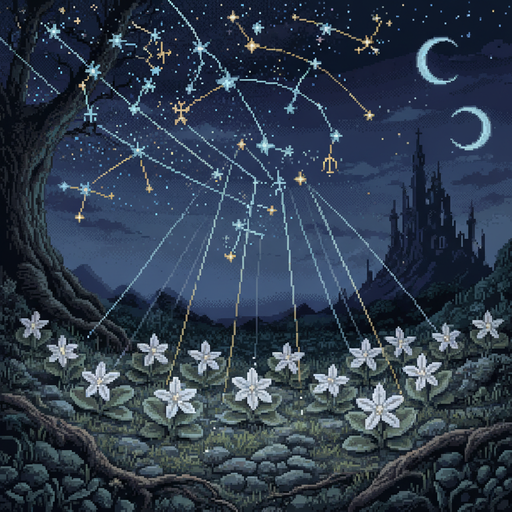 Star-Blossom - Hope
Flower
Star-Blossom - Hope
Flower
Description
Star-blossoms are among the rarest and most precious flowers in the Aetherium—silvery blooms that appear for a single night each year during specific constellation alignments, glowing with captured starlight before withering at dawn. They represent hope, beauty, and the fleeting nature of all precious things in the shattered world.
The plant itself is unremarkable for most of the year: a low-growing perennial with gray-green leaves, easily overlooked among rocks and sparse vegetation. But on the one night when conditions align—when the Constellation of Light reaches its zenith and the Aether is perfectly clear—the star-blossom transforms. Buds that have been forming for months suddenly open, revealing flowers of extraordinary beauty: five-pointed silver petals that glow with soft, steady light, as if they’ve captured and held a piece of starlight itself.
The bloom lasts only until dawn. As the first rays of morning light touch the petals, they begin to wither, losing their glow and turning to ash-gray. By full sunrise, the flowers have fallen, leaving only the plant’s ordinary foliage. The seeds, however, remain viable—tiny silver specks that can germinate if they find the right conditions, which is rare.
Star-blossoms have become symbols of hope in the Aetherium: something beautiful that emerges from harsh conditions, shines brilliantly for a brief moment, then fades. They’re used in weddings, funerals, and celebrations of significant moments. A single flower can cost a month’s wages, and wild groves are protected (though poaching is common). The Constellation Clergy cultivates them in sacred gardens, but even with careful tending, success rates are low.
Physical Characteristics
The Plant
Vegetative State (Most of year): - Low-growing perennial (10-20cm tall) - Gray-green leaves (small, oval, succulent-like) - Grows in rosette pattern - Easily overlooked (blends with rocks) - Requires minimal water
Root System: - Shallow but extensive - Adapted to rocky soil - Stores nutrients for bloom - Sensitive to disturbance (transplanting often fatal)
Buds (Form 3 months before bloom): - Small, silver-gray - Tightly closed - Gradually swell as alignment approaches - Warm to touch (generating internal heat) - Faint glow visible in darkness (week before bloom)
The Flowers
Appearance: - Five-pointed star shape (hence name) - 5-8cm diameter - Silver petals with iridescent sheen - Soft, steady glow (brighter than candle, dimmer than lamp) - Delicate texture (like silk)
Fragrance: - Sweet, complex scent - Described as “moonlight and honey” - Intoxicating but not overwhelming - Carries on wind (can smell grove from distance) - Induces calm, peaceful feelings
Glow Mechanism: - Absorbs starlight during alignment - Stores and re-emits light - Mechanism unknown (subject of study) - Fades gradually through night - Gone by dawn
Withering: - Dawn triggers rapid decay - Petals lose glow first - Turn ash-gray within minutes - Crumble to dust within hour - Seeds remain (tiny, silver, viable)
Ecology and Habitat
Distribution
Primary Habitat: Veiled Heights - High-altitude islands (coldest regions) - Rocky, nutrient-poor soil - Minimal competition from other plants - Clear view of constellations (essential)
Secondary Habitat: Sacred groves - Constellation’s Reach Observatory (cultivated) - Hidden groves (locations secret) - Protected areas (poaching illegal) - Carefully tended by clergy
Former Habitat: Pre-Shattering mountains - Grew in alpine regions - Much more common then - Most populations lost in Shattering - Survivors are remnants
Geographic Range: Very limited - Veiled Heights primarily - Scattered isolated populations - Total wild population: Estimated 5,000-10,000 plants - Endangered status
Growing Conditions
Requirements (All must be met): - Altitude: High (thin Aether, cold) - Soil: Rocky, well-drained, nutrient-poor - Light: Clear view of constellations - Temperature: Cold (5-10°C average) - Isolation: Minimal disturbance
Bloom Triggers: - Constellation of Light at zenith - Clear Aether (no clouds/storms) - Specific date (varies by 1-2 days annually) - Plant must be mature (3+ years old) - All conditions must align perfectly
Why So Rare: - Specific requirements rarely met - Habitat loss (Shattering destroyed mountains) - Poaching (reduces wild populations) - Low reproduction rate - Climate sensitivity
Life Cycle
Germination (Year 1): - Seeds require cold stratification - Germination rate: 10-20% - Seedlings fragile - Most die in first year
Juvenile (Years 2-3): - Slow growth - Builds root system - No flowering - Vulnerable to disturbance
Mature (Year 3+): - Capable of flowering - Blooms once annually (if conditions right) - Can live 20-30 years - Produces 10-50 seeds per bloom
Death: - Natural senescence (age) - Disturbance (trampling, digging) - Climate change (warming) - Disease (rare)
Uses and Value
Medicinal Properties
Fever Reduction: - Petal extract lowers fever effectively - Preparation: Steep petals in hot water - Dosage: 1 petal per cup - Effectiveness: High (comparable to best medicines) - Duration: 6-8 hours
Pain Relief: - Mild analgesic properties - Works on headaches, minor injuries - Not strong enough for serious pain - No side effects - Safe for children
Psychological Calm: - Induces peaceful, hopeful feelings - Reduces anxiety and despair - Used in grief counseling - Effect: Subtle but real - Not addictive
Preparation: - Must be used fresh (within hours of picking) - Dried petals lose potency rapidly - Extracts can be preserved (alchemical process) - Single flower = 5-10 doses
Symbolic Significance
Hope: - Represents hope in dark times - “Even in harshest conditions, beauty blooms” - Used in ceremonies celebrating survival - Gift of star-blossom = “I believe in better days”
Fleeting Beauty: - One night only = precious moments - Reminder to appreciate present - Used in memorials (beauty that fades but is remembered) - Philosophical symbol
Constellation Blessing: - Blooms during constellation alignment - Seen as divine gift - Used in religious ceremonies - Constellation Clergy considers them sacred
Special Occasions: - Weddings (bride wears star-blossom crown) - Funerals (placed with deceased) - Coming-of-age ceremonies - Significant anniversaries
Economic Value
Market Price: - Fresh flower: 100-500 coins (depending on quality) - Dried petals: 50 coins per petal - Extract: 200 coins per vial - Seeds: 1,000 coins (rarely sold)
Buyers: - Wealthy individuals (luxury, status) - Alchemists (medicinal use) - Constellation Clergy (religious use) - Collectors (rare specimens)
Black Market: - Poached flowers cheaper (50-100 coins) - Illegal but common - Quality variable - Risks: Arrest, poor product
Economic Impact: - Supports small communities in Veiled Heights - Harvesting rights valuable - Tourism (people travel to see blooms) - Cultivation attempts (mostly failures)
Cultivation and Conservation
Cultivation Attempts
Constellation’s Reach Gardens: - Most successful cultivation effort - 200+ plants (10-20 bloom annually) - Carefully tended by clergy - Partial success (wild blooms more reliable) - Research ongoing
Private Gardens: - Wealthy individuals attempt cultivation - Success rate: <5% - Usually fail due to imperfect conditions - Expensive failures
Why So Difficult: - Specific altitude/temperature required - Constellation alignment can’t be controlled - Plants sensitive to disturbance - Root system fragile - Takes years to see if attempt succeeded
Successful Techniques: - Replicate natural habitat exactly - Minimal intervention - Patience (3+ years to first bloom) - Accept low success rate - Learn from failures
Conservation Efforts
Protected Groves: - Wild populations protected by law - Poaching illegal (rarely enforced) - Some communities guard groves - Locations kept secret
Clergy Involvement: - Constellation Clergy maintains gardens - Distributes seeds (carefully) - Educates about conservation - Performs ceremonies at wild groves
Challenges: - Enforcement difficult (remote locations) - Poaching profitable - Habitat loss ongoing - Climate change threat
Population Status: - Wild: Declining slowly - Cultivated: Stable but small - Overall: Endangered - Prognosis: Uncertain
Cultural Impact
In Veil-Born Culture
Sacred Flower: - Veil-Born consider star-blossoms sacred - Used in mystical ceremonies - Believed to enhance visions - Elder Talvyn cultivates them at Highfall
The Bloom Vigil: - Veil-Born tradition: Stay awake all night when star-blossoms bloom - Meditate, pray, contemplate - Witness beauty from start to finish - Mark passage of year
In General Culture
Weddings: - Bride wears star-blossom crown (if affordable) - Symbolizes hope for marriage - Extremely expensive (only wealthy can afford) - Alternatives: Artificial flowers, single bloom
Funerals: - Placed with deceased (if available) - Symbolizes: “Your beauty was brief but remembered” - Comfort to mourners - Expensive but meaningful
Art and Literature: - Common motif in poetry - Paintings of star-blossom groves - Songs about fleeting beauty - Symbol of hope and loss simultaneously
Sayings and Proverbs
“Like a star-blossom: Beautiful, brief, and worth the wait.”
“One night of star-blossom is worth a lifetime of ordinary flowers.”
“Hope blooms when constellations align.”
“Treasure the moment—it fades at dawn.”
Threats and Challenges
Poaching
Problem: - High value = strong incentive to poach - Wild groves raided - Plants damaged or killed - Population declining
Methods: - Thieves locate groves (difficult) - Harvest during bloom night - Sell on black market - Repeat annually (if grove survives)
Impact: - Reduces wild populations - Damages ecosystems - Deprives communities of legitimate income - Threatens species survival
Enforcement: - Illegal in most settlements - Rarely enforced (remote locations) - Penalties: Fines, imprisonment - Difficult to catch poachers
Climate Change
Threat: - Aether warming (slight but measurable) - Star-blossoms require cold - Habitat shifting upward (limited space) - May go extinct if warming continues
Evidence: - Some historical groves no longer bloom - Plants stressed in warmer areas - Bloom timing shifting - Concerning trend
Habitat Loss
Causes: - Island fragmentation (ongoing) - Development (rare in Veiled Heights but happens) - Rot expansion (consumes habitat) - Natural disasters
Impact: - Reduces available habitat - Isolates populations - Prevents gene flow - Increases extinction risk
Notable Locations
The Silver Grove (Veiled Heights)
Description: Largest known wild grove, 500+ plants
Location: Secret (protected by local community)
Bloom: Spectacular (hundreds of flowers simultaneously)
Access: Restricted (locals guard it)
Tourism: Controlled (small groups, supervised)
Status: Healthy but threatened by poaching
Constellation’s Reach Gardens
Description: Cultivated grove, 200+ plants
Location: Constellation’s Reach Observatory
Bloom: 10-20 flowers annually (partial success)
Access: Clergy and researchers only
Research: Ongoing cultivation studies
Status: Stable, educational
The Lost Grove (Legend)
Description: Legendary grove of 1,000+ plants
Location: Unknown (possibly myth)
Bloom: Said to be “like stars falling to earth”
Search: Many have sought it, none found it
Status: Probably doesn’t exist (but maybe?)
In Alchemy and Medicine
Medicinal Preparations
Fresh Petal Tea: - Steep 1 petal in hot water - Drink while warm - Effects: Fever reduction, calm - Duration: 6-8 hours - Must use within hours of picking
Petal Extract (Preserved): - Alchemical process - Concentrates active compounds - Shelf-stable (months) - Expensive (200 coins per vial) - 5-10 doses per vial
Petal Powder (Dried): - Grind dried petals - Less effective than fresh - Longer shelf life - Used when fresh unavailable - 50 coins per dose
Research
Glow Mechanism: - How do petals capture and store starlight? - Potential applications in lighting - Alchemist Kael Greythorn studying this - No breakthroughs yet
Medicinal Compounds: - What chemicals provide effects? - Can they be synthesized? - Would eliminate need for rare flowers - Ongoing research
Cultivation Improvement: - How to increase success rate? - Can bloom be triggered artificially? - Genetic studies (limited) - Slow progress
Encounter Scenarios
The Bloom Night
Setup: Party hired to harvest star-blossoms
Complication: Must harvest during single night - Blooms at midnight - Must pick before dawn - Race against time - Flowers fragile
Challenges: - Reaching grove (difficult terrain) - Timing (must arrive before bloom) - Harvesting without damage - Protecting from poachers - Getting flowers to buyer fresh
The Poacher Hunt
Setup: Community hires party to stop poachers
Complication: Poachers are desperate, armed - Grove location secret (must be protected) - Poachers know bloom timing - Confrontation likely - Moral complexity (poachers may be poor, desperate)
Challenges: - Stake out grove - Catch poachers without harming flowers - Decide what to do with them - Protect grove for future
The Dying Wish
Setup: Dying person’s last wish is to see star-blossom bloom
Complication: Bloom is tonight, person is far away - Must transport dying person to grove - Or bring flower to them (withers at dawn) - Time critical - Emotional weight
Challenges: - Logistics (transport) - Time pressure - Keeping person alive - Fulfilling wish before dawn
Related Topics
- Constellation of Light - Bloom trigger
- Veiled Heights - Primary habitat
- Constellation’s Reach - Cultivation site
- Elder Talvyn - Cultivates them
- Veil-Born - Consider them sacred
In-World Documents
From Flora of the Aetherium
Star-blossom (Stellaria luminosa) represents one of the most remarkable adaptations to post-Shattering conditions. The plant’s ability to capture and store starlight is unprecedented and poorly understood.
More significantly, star-blossoms have become cultural touchstones—symbols of hope, beauty, and the fleeting nature of precious things. Their rarity makes them valuable, but their symbolism makes them priceless.
Conservation status: Endangered. Protection: Inadequate. Prognosis: Uncertain.
We may lose them. That would be a tragedy not just ecological, but spiritual.
Veil-Born Blessing
May your life bloom like the star-blossom:
Brief but beautiful,
Rare but remembered,
Shining in darkness,
Treasured by all who witness it.And when dawn comes,
May you fade with grace,
Knowing you brought light
To the long night.
Wedding Vow (Traditional, if star-blossom present)
Like the star-blossom that blooms this night,
Our love is rare, precious, and fleeting.
We cannot hold forever,
But we can treasure each moment,
Shine brightly together,
And remember always
That beauty is worth the brevity.
Poacher’s Confession (Recorded, 284 S.)
I know it’s wrong. I know I’m stealing from everyone.
But my family is starving. One star-blossom feeds us for a month. The wealthy pay fortunes for what grows wild.
I’m careful. I only take a few. I don’t damage the plants.
But I know. Every flower I take is one less for others to see. One less symbol of hope.
I’m stealing hope to buy bread.
I don’t know what else to do.
“Star-blossoms teach us the hardest lesson: that the most
beautiful things are fleeting, that we cannot hold what we most
treasure, that all we can do is witness beauty while it lasts and
remember it when it’s gone. In the Aetherium, where everything is
temporary and nothing is certain, the star-blossom is perfect
symbol—hope that blooms for one night, then fades at dawn, leaving only
memory and the promise that it will bloom again next year. If we’re
lucky. If the conditions align. If we haven’t destroyed it. That’s hope
in the shattered world: fragile, rare, and worth everything.”
—From Botanical Observations by Scholar Evian