Early Aetherium
Period: 0-100 S. (first century
post-Shattering)
Challenge: Survival in fundamentally altered
world
Achievement: Humanity endured (barely)
Legacy: The foundation of current Aetherium
civilization
“First century was survival. Not living, just not dying. Those who made it to Year 100 were tough, lucky, or both. We descend from them. That’s something.”
Quick Reference
|| Attribute | Details | ||———–|———| || Timespan | Year 0-100 S. (first century) | || Population Start | 10-50 million (pre-Shattering) | || Population End | ~500,000 (Year 100 S.) | || Survival Rate | ~1-5% (estimates vary) | || Major Challenge | Learning to survive in Aether | || Key Discovery | Airship technology (rediscovered/invented) | || Defining Threat | The Rot emerges (~30 S.) | || Achievement | Humanity didn’t go extinct |
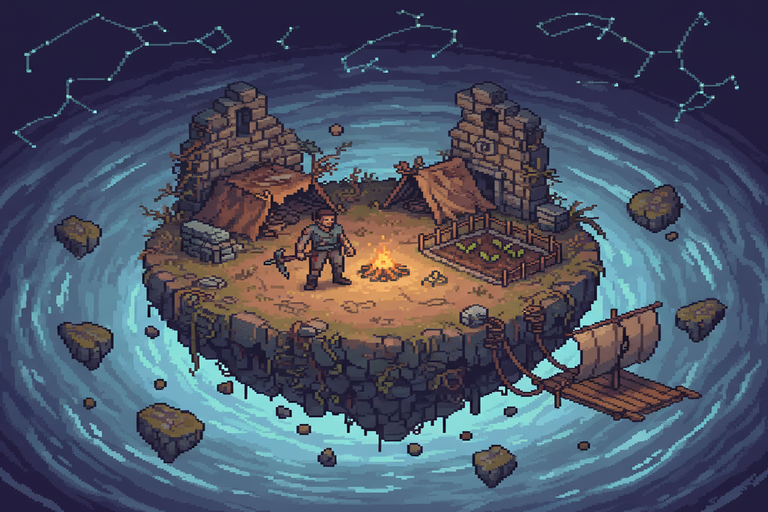 Early Aetherium Survival
Overview
The Early Aetherium period—the first century after the Shattering—represents humanity’s darkest hour and greatest triumph. In Year 0, the world broke. Millions died instantly. Survivors found themselves on floating fragments in a breathable void, with no understanding of what had happened or how to survive.
By Year 100, humanity had endured. Settlements existed. Trade routes connected islands. Airships flew reliably (mostly). Basic governance had emerged. The Constellation Clergy was organizing. Common Tongue was evolving. Population had stabilized (though at a fraction of pre-Shattering numbers).
This transformation—from catastrophic collapse to fragile civilization—required incredible resilience, adaptation, and sacrifice. The survivors of Year 0 watched 90%+ of humanity die. They endured starvation, isolation, despair, and the emergence of the Rot. They learned to navigate the Aether, build airships, and create new societies from ruins.
Every person alive in Year 287 S. descends from these survivors. Their toughness, ingenuity, and refusal to surrender shaped everything that followed. The Early Aetherium wasn’t glorious—it was desperate, brutal, and traumatic. But it was survival. And survival was enough.
The Immediate Aftermath (0-10 S.)
Year 0: The Shattering
Day 8, Dawn: The world broke - Terrum Solidus shattered into thousands of fragments - Fragments cast into Aether (new medium, breathable void) - Millions died instantly (crushed, fell, simply ceased) - Survivors traumatized, confused, terrified
The First Hours: Chaos - No understanding of what happened - Ground beneath feet was floating (impossible) - Sky was luminous void (wrong) - Gravity pulled toward island centers (disorienting) - People fell off edges (didn’t understand danger) - Panic, screaming, madness
The First Days: Realization - World wasn’t coming back - This was permanent - Survivors were isolated on fragments - No communication with other islands - No way to reach them (yet) - Alone in the void
The First Weeks: Survival mode - Find food (what remains from before) - Find water (springs, wells if lucky) - Find shelter (ruins, caves, anything) - Avoid edges (falls are fatal) - Stay sane (hardest challenge)
Year 0-2: The Die-Off
Starvation: Primary killer - Pre-Shattering food systems destroyed - No agriculture (yet) - No trade (isolated) - Stored food ran out (weeks, maybe months) - People starved by thousands
Falls: Second killer - Edges were invisible danger - No railings, no warnings - Children especially vulnerable - Drunk, distracted, or desperate people - Fell into Aether, never returned
Despair: Third killer - Suicides common (hopelessness) - “Why survive this?” (valid question) - Watched loved ones die - World made no sense - Many gave up
Violence: Fourth killer - Resource competition (food, water, shelter) - No law, no governance - Strongest took what they wanted - Murders, raids, chaos - Humanity at its worst
Isolation: Psychological killer - Islands separated by void - No contact with others - Didn’t know if anyone else survived - Loneliness, madness - Some people just… stopped
Population Estimate: - Year 0: 10-50 million (pre-Shattering) - Year 2: 2-5 million (90%+ dead) - Worst die-off in human history
Year 2: The Silence Ends
The Constellations Return: Divine reappearance - For first year, no constellations visible - Only luminous void (terrifying) - Year 2, constellations reappeared - But wrong (patterns different, twisted) - Ambiguous blessing
Star-Readers: Survivors attempt contact - Pre-Shattering Star-Readers tried rituals - Mostly failed (constellations distant, silent) - Occasional success (miracles reported) - Hope rekindled (maybe gods still care) - Faith tested but not broken
Religious Response: Varied - Some: “Gods abandoned us” (despair) - Some: “Gods are testing us” (faith) - Some: “Gods are dead” (nihilism) - Some: “We angered gods” (guilt) - No consensus (still debated)
Year 3-10: Learning to Survive
Agriculture: Reestablished - Soil still fertile (on some islands) - Seeds preserved (some) - Farming knowledge survived (oral tradition) - Crops grew (slowly, uncertainly) - Food production resumed (barely sufficient)
Water: Critical resource - Islands with springs: Valuable - Islands without: Desperate - Rainwater collection (when rain came) - Rationing essential - Water wars (violent competition)
Shelter: Rebuilt - Pre-Shattering buildings (damaged but usable) - New construction (crude, functional) - Materials salvaged (ruins everywhere) - Communities forming (safety in numbers) - Settlements emerging
Population Stabilization: Slow recovery - Birth rate low (malnutrition, stress) - Death rate high (still dangerous) - But: Decline slowing - Year 10: ~3 million (estimate) - Humanity would survive (probably)
Learning to Navigate the Aether (10-30 S.)
The Physics of the New World
Aether: Breathable void - Not vacuum (can breathe) - Not air (different) - Luminous (soft glow, perpetual twilight) - Currents (invisible flows) - Strange but survivable
Gravity: Changed - No longer “down” (toward ground) - Now “in” (toward island centers) - Each island has gravity well - Beyond well: Zero gravity - Disorienting but learnable
Islands: Floating fragments - Stable (mostly) - Drifting (slowly) - Some anchored (mysteriously stationary) - Collisions rare (but catastrophic) - Home now
Edges: Fatal danger - Step off edge: Fall forever - No ground below (just void) - No rescue possible - Deaths constant (especially early) - Learned caution (hard way)
The First Flights (12-20 S.)
Necessity: Islands isolated - Need to reach other islands - Need to trade, communicate - Need to not be alone - Airships essential
Rediscovery/Invention: Unclear which - Pre-Shattering airships existed (primitive) - Did survivors remember? Or reinvent? - Records unclear (both claimed) - Doesn’t matter (worked either way)
Early Attempts: Deadly - Year 12: First recorded flight attempt - Wooden platform, fabric sails - Fell immediately (crash, deaths) - Year 13: Second attempt - Made it 100 meters (then crashed) - Year 14: Third attempt - Reached neighboring island! (success!) - Pilot died on landing (but proved possible)
Trial and Error: Expensive - Dozens of attempts (dozens of deaths) - Gradual improvement (learning from failures) - By Year 20: Reliable-ish airships - Still dangerous (10% crash rate) - But functional (transportation possible)
Technology: Mysterious - Power source unknown (even then) - Pre-Shattering devices still worked (no fuel needed) - New devices copied old designs (worked somehow) - No one understood why (still don’t) - Pragmatism over understanding
First Contact Between Islands (15-25 S.)
Year 15: First successful inter-island contact - Airship from Island A reached Island B - Survivors discovered: Not alone! - Emotional reunion (tears, joy, relief) - Information exchange (what happened? We don’t know either) - Hope renewed
Year 16-20: Network expanding - More islands contacted - Trade beginning (food, tools, knowledge) - Communication establishing (messages, news) - Isolation ending - Community reforming
Year 20-25: Settlements connecting - Regular routes established - Trade networks forming - Population centers emerging - Proto-Eos (largest settlement) - Proto-Ironhold (richest resources) - Dozens of smaller settlements
Cultural Exchange: Rapid - Different islands survived differently - Sharing knowledge (agriculture, construction, navigation) - Sharing stories (what happened, theories, memories) - Common Tongue emerging (trade language) - Unity forming (fragile but real)
The Rot Emerges (30-50 S.)
First Reports (Year 30 S.)
Location: Unknown island (records lost)
Description: “Corruption spreading” - Plants turning black, wrong - Animals becoming aggressive, mutated - People changing (physically, mentally) - Island “sick” (no better word)
Response: Confusion - What is this? - Disease? Poison? Curse? - How to stop it? - Quarantine (only solution)
Spread: Slow but inevitable - Year 31: Three islands infected - Year 35: Ten islands infected - Year 40: Twenty islands infected - Pattern: Accelerating
Understanding the Rot (30-50 S.)
Observations: Systematic study - Alchemists, scholars, Star-Readers - Documenting symptoms, progression - Seeking cure, prevention - Finding: Nothing works
Stages Identified: 1. Touched: Early corruption (plants, animals) 2. Corrupted: Mid-stage (people infected) 3. Hollow: Late-stage (barely recognizable) 4. Consumed: Final stage (island dissolves)
Infection Vectors: Multiple - Contact (touching corrupted matter) - Airborne (Rot-clouds drifting) - Psychological (belief accelerates it?) - Unknown (sometimes just happens)
The Voice Beneath: Discovered - Corrupted individuals report hearing voice - Promises power, knowledge, transformation - Seductive, terrifying - Origin unknown - Resisting difficult
No Cure: Devastating realization - Every attempt failed - Rot irreversible (mostly) - Prayer sometimes slows (not stops) - Alchemy sometimes helps (expensive, rare) - Quarantine only effective response
The First Island Falls (Year 43 S.)
Island Name: Lost to history
Population: ~200
Timeline: - Year 40: Rot detected - Year 41: Quarantine established - Year 42: Evacuation attempted (partial success) - Year 43: Island dissolved into Aether
Witnesses: Nearby islands watched - Island became unrecognizable (twisted, wrong) - Then faded (translucent, ghostly) - Then gone (completely) - Nothing remained (not even fragments) - Terrifying precedent
Impact: Existential threat recognized - Rot doesn’t just kill people - Rot kills islands - Rot could kill everything - New urgency (must survive this too) - Despair renewed (will it ever end?)
Settlement Foundation (30-70 S.)
Proto-Skyport Eos (Founded ~35 S.)
Location: Fragment of pre-Shattering trade city
Advantages: - Large island (3km across) - Natural harbor (Aether-currents favorable) - Pre-Shattering infrastructure (damaged but usable) - Central location (between other settlements)
Population Growth: - Year 35: 50 survivors - Year 50: 500 residents - Year 70: 2,000 residents - Largest settlement
Governance: Elder Council - Five survivors (oldest, wisest) - Consensus decisions - Basic laws established - Disputes arbitrated - Democracy (primitive but functional)
Economy: Trade hub - Airships arrived daily (by Year 60) - Goods exchanged (food, tools, information) - Market established (barter, early currency) - Prosperity (relative to elsewhere)
Culture: Hopeful - “Eos” means “dawn” (new beginning) - Optimistic despite everything - Welcoming to refugees - Building future, not mourning past
Proto-Ironhold (Founded ~40 S.)
Location: Fragment of pre-Shattering mining city
Discovery: Rich iron deposits - Valuable resource (tools, weapons, construction) - Attracted settlers (miners, blacksmiths) - Economic advantage
Population Growth: - Year 40: 30 miners - Year 50: 300 residents - Year 70: 1,500 residents - Second-largest settlement
Governance: Commandant system - Strongest miner became leader - Authoritarian (efficient but harsh) - Order maintained (strictly) - Dissent punished - Stability (at cost of freedom)
Economy: Resource extraction - Iron mined, processed, sold - Monopoly on metal (powerful position) - Wealthy settlement (but unequal distribution) - Attracted Guild interest (early merchants)
Culture: Pragmatic - Survival over idealism - Strength respected - Weakness despised - Harsh but effective
Outland Settlements (Founded 30-70 S.)
Scattered: Dozens of small communities - 10-100 people each - Independent (no central authority) - Self-sufficient (had to be) - Isolated (limited contact)
Governance: Varied - Tribal councils (elder consensus) - Strong leaders (charismatic individuals) - Family clans (kinship bonds) - No standard system
Economy: Subsistence - Farming, fishing, hunting - Little trade (too remote) - Barter when necessary - Poor but free
Culture: Diverse - Preserved pre-Shattering traditions - Each settlement unique - Resistant to homogenization - Valued independence
Cultural Development (50-100 S.)
Language Evolution
Pre-Shattering: Hundreds of languages - Regional diversity (no common tongue) - Trade languages (simplified) - Scholarly languages (Old Luminar)
Post-Shattering: Necessity - Need to communicate (survival) - Trade requires common language - Isolation reduced diversity
Common Tongue Emergence (50-80 S.): - Evolved from trade language - Simplified grammar (easy to learn) - Mixed vocabulary (all languages contributed) - By Year 80: 70% spoke Common Tongue - By Year 100: 90% spoke Common Tongue
Old Languages: Dying - Elders remembered (but dying) - Youth learned Common (practical) - Scholarly texts (preserved by few) - Cultural loss (but necessary)
Religious Organization
Year 50-70: Constellation Clergy forming - Scattered Star-Readers (survivors) - Organizing (strength in unity) - Standardizing doctrine (what to believe) - Building chapels (sacred spaces) - Training new priests (passing knowledge)
Theology: Evolving - Pre-Shattering: Constellations answered reliably - Post-Shattering: Constellations distant, silent - Question: Why? (no consensus) - Theories: Punishment, test, wounded, dead, other - Faith tested but surviving
Practices: Adapting - Pre-Shattering rituals (modified for Aether) - New prayers (addressing current reality) - Constellation-watching (navigational and spiritual) - Offerings (what little people had) - Hope maintained (barely)
Calendar and Time
Year 0 Defined: The Shattering - Defining moment (everything changed) - Before Shattering (B.S. or negative years) - After Shattering (S. or positive years) - Universal adoption (by Year 60)
Timekeeping: Challenging - No sun (just luminous void) - Constellations move (but irregularly) - “Day” and “night” (arbitrary but maintained) - Clocks (pre-Shattering devices still worked) - Consistency difficult but necessary
Memory Preservation
Oral Tradition: Primary method - Elders told stories (pre-Shattering world) - Youth listened (preserving knowledge) - Accuracy degrading (each retelling) - But: Better than nothing
Written Records: Rare - Literacy low (~10% by Year 100) - Materials scarce (paper, ink expensive) - Archivists emerging (dedicated preservers) - Fragmentary but precious
Cultural Identity: Forming - Not pre-Shattering humans (that world gone) - Not yet Aetherium civilization (too early) - Transitional generation (between worlds) - Defining themselves (survivors, adapters, endurers)
Achievements by Year 100 S.
Survival: Humanity Endured
Population: ~500,000 - From 10-50 million (Year 0) - To 2-5 million (Year 2) - To ~500,000 (Year 100) - Declining but stable - Extinction avoided
Settlements: Established - Proto-Eos: 2,000 residents - Proto-Ironhold: 1,500 residents - Dozens of smaller settlements: 10-500 each - Total: ~50 known settlements - Civilization exists
Technology: Functional
Airships: Reliable (mostly) - 50% crash rate (Year 20) - 10% crash rate (Year 100) - Still dangerous (but manageable) - Transportation network established
Agriculture: Productive - Crop yields improving (learning Aether-farming) - Irrigation systems (adapted for floating islands) - Food surplus (some settlements) - Starvation rare (by Year 100)
Construction: Advanced - Understanding island stability - Building for Aether environment - Using salvaged materials (efficiently) - New architecture emerging
Medicine: Basic - Herbal remedies (preserved knowledge) - Surgery (crude but sometimes effective) - Alchemy (developing) - Lifespan: 40-50 years (up from 30-40 early period)
Society: Organized
Governance: Established - Elder Councils (democratic) - Commandants (authoritarian) - Tribal Councils (traditional) - Varied but functional
Law: Basic codes - Murder forbidden (universally) - Theft punished (variably) - Contracts enforced (trade requires trust) - Disputes arbitrated (preventing violence)
Trade: Networks - Regular routes (Eos-Ironhold, others) - Currency emerging (barter + early coins) - Specialization (settlements develop niches) - Economy functioning
Culture: Forming - Common Tongue (90% adoption) - Shared calendar (Year 0 system) - Constellation Clergy (organizing) - Post-Shattering identity (emerging)
Hope: Possible
Year 0: Despair (will we survive?) Year 50: Uncertainty (maybe we’ll survive?) Year 100: Hope (we will survive)
Shift: Psychological - From “not dying” to “living” - From “enduring” to “building” - From “survivors” to “citizens” - Future conceivable (not assured, but possible)
Losses
Population: Catastrophic
Numbers: 95-98% dead - Year 0: 10-50 million - Year 100: ~500,000 - Worst die-off in history - Genetic bottleneck (consequences unknown)
Knowledge: Vast
Technology: Lost - Advanced Apogee tech (irreproducible) - Scientific understanding (forgotten) - Engineering techniques (gone) - Medical knowledge (fragmentary)
Culture: Erased - Languages (hundreds dead) - Art (destroyed) - Literature (burned, lost) - History (forgotten)
Unity: Shattered - Global civilization (replaced by isolated settlements) - Instant communication (replaced by slow airships) - Coordination (replaced by independence)
Certainty: Gone
Constellations: Silent - Pre-Shattering: Answered reliably - Post-Shattering: Distant, ambiguous - Faith tested (many lost it)
Ground: Literally - Solid earth (gone) - Stability (gone) - Predictability (gone) - Replaced by floating void
Future: Uncertain - Will humanity survive? (Unknown) - Will Rot consume everything? (Unknown) - Will constellations return? (Unknown) - Living with uncertainty (new normal)
In-World Documents
Survivor’s Journal (Year 1 S.)
Day 47 since the world broke
I don’t know why I’m writing this. Who will read it? Everyone is dead.
My wife died Day 3. Starvation. My son died Day 12. Fell off the edge. Didn’t understand the danger. He was seven.
I’m alone on this fragment. Maybe 50 meters across. Used to be part of Market Square. I recognize the fountain. Dry now. No water.
I found some grain in a collapsed building. Maybe enough for a week. Then what?
The sky is wrong. It glows. There’s no sun. Just… light. From everywhere. From nowhere.
I should jump. Follow my son into the void. But I don’t. I keep eating grain. I keep breathing. I keep writing.
Why? I don’t know.
Maybe tomorrow I’ll jump. Maybe tomorrow.
[Note: Author survived. Journal found Year 67 S. Author lived to Year 45 S., helped found Proto-Eos.]
First Flight Log (Year 14 S.)
Pilot: Kael Windborn (age 19) Vessel: Hope’s Gamble (wooden platform, fabric sails) Destination: Island visible 2km distant Objective: Reach other island, prove it’s possible
Launch: Dawn. Vessel lifted (barely). Crew: Myself, two others.
Hour 1: Drifting. Sails caught Aether-current (we think). Moving toward destination.
Hour 2: Faster now. Too fast? Can’t control well. Destination approaching.
Hour 3: IMPACT. Crashed into island edge. Vessel destroyed. Two crew dead (impact). I survived (luck).
Conclusion: IT WORKS. We can reach other islands. We can fly.
Cost: Two lives. Worth it? I think yes. We’re not alone anymore.
[Note: Kael Windborn became legendary pilot. Died Year 56 S. in storm. Honored as “Father of Flight.”]
Rot Report (Year 35 S.)
To: All Settlements From: Alchemist Council, Proto-Eos Subject: The Corruption (now called “Rot”)
Findings: We’ve studied the Rot for five years. Here’s what we know:
- It spreads: Contact, airborne, unknown vectors
- It transforms: Living things become wrong
- It’s irreversible: No cure found (yet)
- It kills islands: Not just people—entire islands dissolve
- It’s accelerating: More islands infected each year
Recommendations: 1. Quarantine: Isolate infected islands immediately 2. Evacuation: Remove people before too late 3. Research: Continue seeking cure (don’t give up) 4. Prayer: Constellation blessings sometimes help
Prognosis: Grim. If we don’t find solution, Rot will consume everything. Timeline: Unknown. Could be decades. Could be centuries.
Hope: We survived the Shattering. We’ll survive this too. Somehow.
—Chief Alchemist Mara Truthseeker, Year 35 S.
Elder Council Minutes (Year 60 S., Proto-Eos)
Attendance: All five Elders
Topic: Population census results
Report: Current population (all known settlements): ~350,000
Discussion: - Elder Theron: “We’re recovering. Year 0 was millions. Year 2 was thousands. Now hundreds of thousands. Upward trend.” - Elder Mara: “But still declining. Birth rate low. Death rate high. We’re not replacing losses.” - Elder Kael: “Give it time. We’re still adapting. Another century, we’ll be thriving.” - Elder Salis: “Or extinct. Rot accelerating. Islands falling. We might not have another century.” - Elder Vask: “Then we fight. We’ve survived this long. We’ll survive longer.”
Vote: Continue current policies. Encourage births (incentives). Research Rot cure (funding). Maintain hope (essential).
Unanimous: We endure.
Children’s Song (Origin: Year 70 S., Still Sung)
The world broke, the sky changed,
Everything we knew was rearranged,
But we’re still here, we’re still strong,
We’ll survive, we’ll carry on.The ground floats, the stars are strange,
Nothing will ever be the same,
But we adapt, we learn, we grow,
This is our world, this is our home.
Philosopher’s Reflection (Year 95 S.)
Question: What did we lose in the Shattering?
Answer: Everything. And nothing.
Everything: The world, our civilization, our certainty, our loved ones, our future.
Nothing: We’re still human. We still love, hope, dream, fight. The Shattering broke the world. It didn’t break us.
Conclusion: First century was about survival. Second century will be about living. We’ve proven we can endure. Now let’s prove we can thrive.
—Philosopher Kael Thoughtweaver, Year 95 S.
Quest Hooks
The Year 0 Survivor: Meet someone who lived through the Shattering (now 100+ years old, dying). Record their testimony. Hear firsthand account. Preserve history before it’s lost.
The First Flight: Discover wreckage of Hope’s Gamble (first successful inter-island flight). Archaeologists want to study. Descendants want to honor. Museum wants to display. What do you do?
The Lost Settlement: Find abandoned Early Aetherium settlement (founded Year 40, abandoned Year 60). What happened? Why did they leave? What did they leave behind?
The Rot Origin: Investigate where Rot first appeared (Year 30). Island still exists (barely, heavily corrupted). Could reveal Rot’s origin. Dangerous but potentially valuable.
The Survivor’s Guilt: Help descendant of someone who survived while family died. They struggle with inherited trauma. Therapy? Quest for meaning? Honoring the dead?
The Early Technology: Find cache of Early Aetherium tools (crude but functional). Museum wants them. Collectors want them. Descendants want them. Who gets them?
The First Council: Discover records of first Elder Council meeting (Proto-Eos, Year 40). Reveals early governance decisions. Some controversial. Publish or suppress?
The Quarantine Island: Investigate island quarantined Year 35 (Rot outbreak). Never lifted (assumed everyone dead). But: Recent signal detected. Someone alive? Investigate?
The Memory Keeper: Meet person who memorized pre-Shattering knowledge (oral tradition). They’re dying. Record everything they know. Race against time.
The Hundred-Year Celebration: Year 100 S. celebration (humanity survived a century). Organize festival. Honor dead. Celebrate living. Look toward future.
Related Topics
- The Shattering - The event that began this period
- Middle Period - What came after (100-284 S.)
- Pre-Shattering Era - What came before
- The Rot - The threat that emerged
- Skyport Eos - Founded this period
- Ironhold - Founded this period
- Timeline - Complete chronology
“First century was survival. Not living, just not dying. Those
who made it to Year 100 were tough, lucky, or both. We descend from
them. That’s something.”
—Common saying
“They watched the world break. They watched everyone die. They
survived anyway. That’s not just tough. That’s transcendent.”
—Historian’s reflection
“Year 0 to Year 100: From millions to thousands to hundreds of
thousands. From despair to uncertainty to hope. From ending to
beginning. That’s the Early Aetherium. That’s our
foundation.”
—Archivist’s summary