The Falling Platforms
“Where Choice Meets the Void”
“Better to fall gracefully than cling desperately.”
—Inscription at Platform Seven
Quick Reference
| Attribute | Details |
|---|---|
| Location | Multiple sites across the Aetherium (12 known platforms) |
| Region | Various (most in Murky Chasm and remote islands) |
| Size | Individual platforms vary (10m x 10m to 50m x 50m) |
| Population | No permanent residents (Void-Walker clergy visit regularly) |
| Government | Unregulated (controversial legal status) |
| Primary Faction | Constellation of the Abyss clergy |
| Purpose | Voluntary death sites for terminal cases |
| Founded | First platform: Year 89 S. (198 years ago) |
| Legal Status | Varies by jurisdiction (banned in Ironhold, tolerated in Murky Chasm) |
| Controversy Level | Extreme (society deeply divided) |
 The
Falling Platforms
The
Falling Platforms
Table of Contents
- Overview
- History and Origins
- The Platforms
- Philosophy and Purpose
- The Process
- Void-Walker Role
- Legal Status
- The Controversy
- Arguments For and Against
- Cultural Impact
- Notable Cases
- Current Situation (287 S.)
- Quest Hooks
- Related Topics
- In-World Documents
Overview
The Falling Platforms are the most controversial locations in the Aetherium—simple stone structures extending over the void where those who have chosen to die can step off the edge of the world. They are not suicide sites, their defenders insist. They are places of dignified death for the terminal, the suffering, the Rot-corrupted who have no hope of cure. They are compassionate alternatives to slow, agonizing deaths. They are exercises in bodily autonomy and acceptance of mortality.
They are suicide sites, their critics counter. They are death cults made manifest. They enable and encourage giving up. They blur the line between accepting death and seeking it. They are dangerous, immoral, and should be illegal everywhere.
Both sides are partially right. The truth is more complicated.
The platforms were first established in Year 89 S. by Brother Kael the Accepting, a Void-Walker priest who watched his sister die slowly of Stage 3 Rot corruption over six agonizing months. She begged for death. She tried to throw herself off the island edge but was stopped. She died eventually, in pain, having lost all dignity. Brother Kael decided no one else should suffer like that.
He built Platform One in Murky Chasm, a simple stone structure extending 20 meters beyond the island’s edge. He announced its purpose: a place for the terminal, the suffering, the Rot-corrupted beyond hope to choose their moment of death with dignity. He would stand vigil with anyone who came. He would not encourage, but he would not prevent. He would witness their choice and honor their decision.
The response was immediate and polarized. Some called him a saint of compassion. Others called him a murderer. The platforms have been controversial ever since.
Today, 12 known platforms exist across the Aetherium, mostly in remote locations or settlements that tolerate Abyss worship. Ironhold has banned them. Skyport Eos has no platforms but doesn’t prosecute those who travel elsewhere to use them. Murky Chasm openly tolerates them. The debate continues, with no resolution in sight.
History and Origins
Brother Kael the Accepting (Year 89 S.)
Background: - Void-Walker priest of the Constellation of the Abyss - Sister Mara contracted Stage 3 Rot corruption - Watched her suffer for six months - She begged for death (illegal, no one would help) - She attempted to throw herself off island edge (stopped, restrained) - She died eventually, in agony, having lost all dignity
His Decision: - “No one else should suffer like that” - Built Platform One in Murky Chasm - Announced purpose: dignified death for terminal cases - Would stand vigil, not encourage, not prevent - Would witness and honor
First Use (Year 89 S., three months after construction): - Elderly man, Stage 3 Rot, in constant pain - Spoke with Brother Kael for two hours - Made peace with decision - Walked to edge, spoke prayer, stepped off - Brother Kael witnessed, wept, honored him
Reaction: - Half the community: “This is compassion” - Half the community: “This is murder” - Debate has continued for 198 years
Expansion (Year 90-150 S.)
Platform Two (Year 92 S.): - Built in remote island in Howling Expanse - By another Void-Walker inspired by Brother Kael - Same purpose, same protocols
Platforms Three through Seven (Year 95-120 S.): - Built in various locations - All by Abyss clergy - All controversial - All defended as compassionate
Platform Seven (Year 108 S.): - Most famous platform - Built in Murky Chasm - Largest, most accessible - Most used (300+ people have fallen from it) - Most controversial
Legal Battles (Year 120-156 S.)
Ironhold Ban (Year 134 S.): - Commandant declares platforms illegal - “Enabling suicide is murder” - Anyone building or using platform prosecuted - Void-Walkers arrested if they facilitate
Murky Chasm Protection (Year 138 S.): - Murky Chasm council officially protects platforms - “Bodily autonomy includes right to die with dignity” - Platforms legal, regulated - Must have Void-Walker present, must be terminal
Skyport Eos Compromise (Year 145 S.): - No platforms in Eos territory - But won’t prosecute citizens who travel elsewhere - “We don’t approve, but we don’t control” - Uncomfortable middle ground
The Great Schism Impact (Year 156 S.)
When Serpent worship was banned, Abyss worship came under scrutiny: - Some wanted to ban Abyss too (death cult accusations) - Orthodox clergy defended Abyss (legitimate constellation) - Compromise: Abyss worship legal, platforms controversial - Increased restrictions and oversight
Modern Era (Year 200-287 S.)
Platform Eight through Twelve (Year 215-270 S.): - New platforms built in remote locations - Increasingly secretive (avoid controversy) - Some unlisted (locations known only to Void-Walkers)
Current Status: - 12 known platforms - Possibly more secret ones - Legal status varies by jurisdiction - Controversy undiminished - Usage increasing (more Rot-corruption, more desperation)
The Platforms
Platform One (The First)
Location: Murky Chasm,
eastern edge
Built: Year 89 S. (198 years old)
Size: 15m x 15m, extends 20m beyond edge
Status: Active, maintained, protected
Notable: First platform, historical significance
Usage: 150+ people have fallen from it
Atmosphere: Solemn, sacred to Abyss worshippers
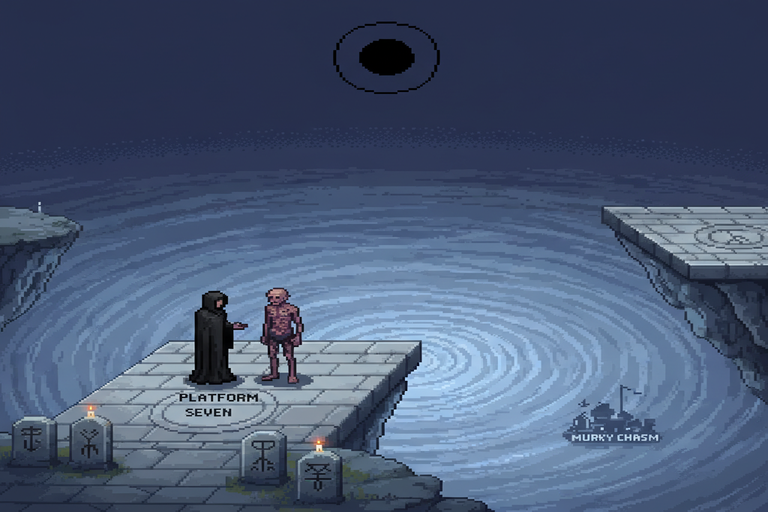
Platform Seven (The Famous)
Location: Murky Chasm,
southern edge
Built: Year 108 S. (179 years old)
Size: 30m x 30m, extends 25m beyond edge
Status: Active, most used
Notable: Largest, most accessible, most
controversial
Usage: 300+ people have fallen from it
Features: - Memorial stones (names of those who fell) -
Abyss constellation symbol carved in stone - Seating area for
contemplation - Void-Walker station (priest present daily)
Platform Three (The Remote)
Location: Unnamed island in Howling Expanse
Built: Year 95 S.
Size: 10m x 10m, extends 15m
Status: Active but rarely used (difficult to
reach)
Notable: Most isolated, most peaceful
Usage: 40+ people have fallen from it
Atmosphere: Profound solitude
Platform Nine (The Secret)
Location: Unknown (location shared only with
terminal cases)
Built: Year 245 S. (estimated)
Size: Unknown
Status: Active, deliberately hidden
Notable: Built to avoid protesters and legal
issues
Usage: Unknown (estimated 50+)
Access: Only Void-Walkers know location
Platforms Two, Four, Five, Six, Eight, Ten, Eleven, Twelve
Status: Various (active, abandoned, secret)
Details: Less documented, less used
Significance: Demonstrate spread of practice across
Aetherium
Philosophy and Purpose
What Platforms Are For (According to Void-Walkers)
Terminal Illness: - Stage 3 Rot corruption (no cure, agonizing death) - Other terminal diseases (painful, inevitable death) - Elderly in final decline (body failing, suffering)
Dignified Death: - Choice of moment (not prolonged suffering) - Peaceful setting (not dying in agony) - Witnessed and honored (not alone) - Control over ending (autonomy)
Acceptance, Not Encouragement: - Void-Walkers don’t encourage falling - They witness, honor, support decision - They ensure person is terminal, not treatable - They provide alternative perspectives - But ultimately respect autonomy
Compassion: - Watching someone suffer for months is cruelty - Preventing them from ending suffering is cruelty - Offering dignified alternative is compassion - This is mercy, not murder
What Platforms Are NOT For (Official Position)
Not for: - Healthy people seeking escape - Treatable depression or despair - Temporary suffering - Coercion or pressure - Impulsive decisions - Mental illness without terminal physical condition
Safeguards: - Void-Walker must assess person - Must verify terminal condition - Must ensure decision is informed, voluntary - Must offer alternatives - Must wait minimum 24 hours (cooling-off period) - Must document decision
The Abyss Theology
Core Teaching: “All things end. Acceptance brings peace.”
Applied to Platforms: - Death is inevitable (especially for terminal cases) - Prolonged suffering serves no purpose - Accepting death enables peaceful ending - Choosing moment is exercising autonomy - Falling gracefully is better than clinging desperately
Distinction: - Accepting natural death ≠ seeking unnatural death - Terminal person choosing timing ≠ healthy person seeking escape - Peace with mortality ≠ giving up on life
Controversy: Critics say distinction is too subtle, line too easily crossed
The Process
How Someone Uses a Platform
Step 1: Decision - Person decides they want to use platform - Usually terminal, suffering, seeing no alternative - Contacts Void-Walker clergy or travels to platform
Step 2: Assessment - Void-Walker speaks with person (hours-long conversation) - Verifies terminal condition (medical evidence if available) - Ensures decision is voluntary (no coercion) - Discusses alternatives (treatment, hospice, other options) - Assesses mental state (depression vs. acceptance)
Step 3: Waiting Period - Minimum 24 hours between assessment and falling - Allows time for reflection - Person can change mind (no shame, no pressure) - Many do change mind (Void-Walkers support this)
Step 4: Preparation - Person writes final words (if desired) - Says goodbyes (if family present) - Makes peace with decision - Void-Walker performs ritual (prayers to Abyss)
Step 5: The Walk - Person walks onto platform - Void-Walker accompanies to edge (if person wants) - Final words spoken - Person steps off when ready
Step 6: Witnessing - Void-Walker watches person fall - Speaks prayer: “Into the void, into rest, into peace” - Records name (if person wanted to be remembered) - Grieves (this is never easy)
Step 7: Aftermath - Void-Walker reports death (if legally required) - Informs family (if person wanted them informed) - Adds name to memorial stones (if person wanted) - Processes own grief (witnessing deaths is traumatic)
Typical Timeline
- Assessment: 2-4 hours
- Waiting Period: 24-72 hours (sometimes longer)
- Preparation: 1-2 hours
- The Walk: 5-15 minutes
- Total: 2-4 days from first contact to falling
Change of Mind
Frequency: 30-40% of people change their mind during waiting period
Void-Walker Response: - Support decision to continue living - No shame, no judgment - Help find alternatives - Consider it success (gave person time to reconsider)
Significance: - Proves platforms aren’t encouraging death - Waiting period works - Assessment process works - Many people just needed to know they had option
Void-Walker Role
Responsibilities
Assessment: - Determine if person is truly terminal - Verify decision is voluntary - Assess mental state - Discuss alternatives - Ensure informed consent
Witness: - Stand vigil with person - Provide emotional support - Perform rituals - Watch them fall - Honor their choice
Record-Keeping: - Document decisions - Report deaths (where legally required) - Maintain memorial records - Preserve final words
Emotional Support: - For person choosing to fall - For family members (if present) - For themselves (this work is traumatic)
Training
Requirements: - 5+ years as Void-Walker priest - Specialized training in end-of-life care - Mental health assessment skills - Grief counseling experience - Strong emotional resilience
Ongoing Support: - Void-Walkers who work platforms rotate (6 months on, 6 months off) - Peer support groups - Counseling available - Recognition that this work causes trauma
Emotional Toll
Reality: Witnessing deaths constantly is devastating
Common Experiences: - Compassion fatigue - Vicarious trauma - Grief accumulation - Questioning of purpose - Burnout
Support Systems: - Mandatory breaks - Peer counseling - Rotation to other duties - Recognition of sacrifice
Motivation: - Belief in compassion - Witnessing suffering without platforms - Conviction that this is mercy - Acceptance of personal cost
Notable Void-Walkers
Brother Kael the Accepting (died Year 134 S.): - Founded first platform - Witnessed 89 deaths - Died peacefully, old age - Considered saint by Abyss worshippers
Sister Mara Restgiver (current): - Runs Hospice of Final Rest - Also oversees Platform Seven - Witnessed 200+ deaths - Exhausted but continues
The Silent Voice Silas Darkwater (current): - High clergy representative - Age 73, dying of Rot (accepted) - Will use platform himself when time comes - Living example of philosophy
Legal Status
Where Platforms Are Legal
Murky Chasm: - Fully legal, regulated - Platforms protected by law - Void-Walker presence required - Terminal condition must be verified - Most platforms located here
Remote Islands: - Often unregulated (no government) - Platforms exist, no one stops them - Legal status unclear
Where Platforms Are Illegal
Ironhold: - Completely banned (Year 134 S.) - Building platform: 10 years prison - Using platform: prosecuted as suicide (family shamed) - Facilitating use: prosecuted as murder - Void-Walkers arrested
Other Major Settlements: - Most ban platforms (follow Ironhold’s lead) - Enforcement varies - Some prosecute, some ignore
Where Status Is Unclear
Skyport Eos: - No platforms in territory - But doesn’t prosecute citizens who travel elsewhere - Uncomfortable compromise - “We don’t approve, but we don’t control”
Most Settlements: - No official policy - Depends on local leadership - Often case-by-case decisions
Legal Debates
Pro-Legalization Arguments: - Bodily autonomy (right to die with dignity) - Compassion for terminal suffering - Reduces prolonged agony - Regulated platforms safer than unregulated suicide
Anti-Legalization Arguments: - Sanctity of life - Slippery slope (who counts as terminal?) - Potential for abuse (coercion, pressure) - Society should never facilitate death
Current Trend: More settlements banning (fear of Rot-corruption increasing platform use)
The Controversy
Arguments For Platforms
Compassion: - Terminal suffering is cruel - Prolonging agony serves no purpose - Mercy means offering peaceful alternative - Watching someone suffer for months is inhumane
Autonomy: - People own their own bodies - Right to choose moment of death - Government shouldn’t control this - Personal decision, not societal
Practical Reality: - People will kill themselves anyway (platforms or not) - Platforms provide dignified alternative - Void-Walker presence ensures informed decision - Waiting period prevents impulsive choices
Rot-Corruption Specific: - Stage 3 Rot has no cure - Death is inevitable, agonizing - Transformation into Rot-Beast is horror - Choosing death before transformation is rational
Religious Freedom: - Abyss worship is legitimate - Platforms are religious practice - Banning them violates freedom of worship - Orthodox clergy recognize Abyss
Arguments Against Platforms
Sanctity of Life: - Life is sacred - Society should never facilitate death - Killing is wrong, even if voluntary - Void-Walkers are accomplices to murder
Slippery Slope: - Who decides what’s “terminal enough”? - Today: Stage 3 Rot. Tomorrow: Stage 2? Stage 1? - Depression could be considered terminal - Line will keep moving
Coercion Risk: - Family pressure (burden on resources) - Economic pressure (can’t afford care) - Social pressure (don’t want to be burden) - “Choice” may not be truly free
Encouragement: - Platforms normalize suicide - Make death seem attractive - Vulnerable people influenced - Society should fight death, not enable it
Rot-Corruption Specific: - Giving up on cure research - Some Stage 3 patients stabilize - Accepting death means not fighting - Should seek treatment, not platforms
Religious Objection: - Most constellations oppose suicide - Life is gift from divine - Humans shouldn’t choose death - Abyss worship is dangerous
Middle Ground Positions
Regulated Tolerance: - Platforms legal but heavily regulated - Strict criteria for use - Multiple assessments required - Waiting periods enforced - Documentation mandatory
Compassionate Opposition: - Understand motivation but oppose practice - Improve hospice care instead - Better pain management - Support for dying, not platforms for dying
Case-by-Case: - Some cases justify platforms (extreme suffering) - Others don’t (treatable conditions) - Avoid blanket policies - Difficult decisions made individually
Cultural Impact
On Death Practices
Normalization of Discussion: - Platforms force society to discuss death openly - Previously taboo topic now debated - Increased awareness of end-of-life issues - Better hospice care (response to platforms)
Right-to-Die Movement: - Platforms inspired broader movement - Advocates for death with dignity - Political activism - Cultural shift toward accepting mortality
On Rot-Corruption
Practical Response: - Many Stage 3 Rot patients use platforms - Prevents transformation into Rot-Beasts - Families find closure (vs. transformation horror) - Controversial but pragmatic
Ethical Debate: - Should Rot-infected be encouraged to use platforms? - Is this compassion or giving up on cure? - Does availability of platforms reduce cure research funding? - No consensus
On Religion
Abyss Worship Growth: - Platforms increase visibility of Abyss - More people turn to Abyss in terminal stages - Controversy strengthens Abyss community - Also increases opposition
Interfaith Tension: - Other constellations oppose platforms - Light clergy especially (hope vs. acceptance) - Memory ambivalent (honor dead but don’t encourage death) - Forge opposed (fight, don’t surrender)
On Society
Division: - Issue deeply polarizes communities - Families split over platforms - Political debates intense - No resolution in sight
Reflection: - Platforms force society to confront mortality - Uncomfortable but necessary conversation - What does compassion mean? - What are limits of autonomy?
Notable Cases
The First Falling (Year 89 S.)
Person: Elderly man, Stage 3 Rot, constant pain
Process: Spoke with Brother Kael for two hours, made
peace, walked to edge, fell
Impact: Established precedent, proved concept could
work peacefully
Legacy: Remembered as dignified death
The Mother’s Choice (Year 112 S.)
Person: Mother of three, Stage 3 Rot, didn’t want
children to watch transformation
Process: Said goodbye to children, used Platform Seven,
fell peacefully
Impact: Highlighted family considerations, sparked
debate about children witnessing
Controversy: Some said she abandoned children, others
said she protected them
The Protest Suicide (Year 156 S.)
Person: Healthy activist opposed to platforms, used
one to prove they’re dangerous
Process: Void-Walker refused to witness (not terminal),
person jumped anyway
Impact: Massive controversy, nearly got platforms
banned everywhere
Legacy: Led to stricter assessment protocols
The Healer’s Fall (Year 203 S.)
Person: Elderly healer, terminal illness, used
platform after lifetime helping others
Process: Community gathered to honor her, she spoke
final wisdom, fell peacefully
Impact: Demonstrated platforms can be used with dignity
and community support
Legacy: Shifted some opinions toward acceptance
The Rot-Touched Leader (Year 278 S.)
Person: Settlement elder, Stage 3 Rot, used platform to
prevent transformation
Process: Public ceremony, addressed community, thanked
them, fell
Impact: Showed leadership in accepting death, community
supported decision
Controversy: Some said he should have fought, others
honored his choice
Current Situation (287 S.)
Increased Usage
Statistics: - 30-40 people per year use platforms (up from 15-20 a decade ago) - 60% are Stage 3 Rot patients - 25% are elderly/terminal illness - 15% are other (chronic pain, etc.)
Reasons for Increase: - More Rot-corruption (more terminal cases) - Better awareness (people know platforms exist) - Improved access (more platforms, better communication) - Increased desperation (world is dying, more people giving up)
Political Pressure
Ban Movement: - Ironhold pushing for Aetherium-wide ban - Argument: platforms enable giving up (society needs fighters) - Support from Light and Forge clergy - Significant political momentum
Protection Movement: - Murky Chasm defending platforms - Argument: compassion and autonomy matter - Support from Abyss clergy and right-to-die advocates - Significant grassroots support
Likely Outcome: Status quo continues (no consensus possible)
Void-Walker Shortage
Problem: - Not enough Void-Walkers willing to work platforms - Emotional toll is severe - Burnout rate high - Platforms sometimes unstaffed
Impact: - Longer waiting periods - Some people use platforms without Void-Walker present (dangerous) - Quality of assessment declining - Increased risk of inappropriate use
Response: - Abyss clergy recruiting more Void-Walkers - Better support systems - Rotation schedules - But shortage continues
The Silent Voice’s Decision
Significance: - Silas Darkwater (high clergy) is dying of Rot - Has announced he will use Platform Seven when time comes - Will be most prominent person to use platform - Massive symbolic impact
Controversy: - Supporters: demonstrates philosophy is sincere - Critics: high clergy shouldn’t encourage suicide - Will likely intensify debate
Quest Hooks
The Assessment: Void-Walker asks you to help assess someone requesting platform use. Interview them, verify terminal condition, provide perspective. Decide if they should be allowed to proceed. Heavy moral weight.
The Protest: Activists planning to block Platform Seven (prevent anyone from using it). Join them (save lives?) or oppose them (protect autonomy?). Confrontation inevitable.
The Family Divided: Family member wants to use platform, family is split. Some support, some oppose. Mediate conflict, help family reach decision. No right answer.
The Imposter: Someone claiming to be terminal seeks platform use (actually healthy, seeking escape from debt). Discover deception, confront them. Void-Walker would have caught this, but platform is currently unstaffed.
The Coercion: Elderly person pressured by family to use platform (they’re expensive to care for). Investigate, expose coercion, protect victim. Or discover situation is more complicated than it appears.
The Vigil: Void-Walker asks you to stand vigil with them (they need support). Witness someone’s final moments, process experience, decide what you think about platforms. Emotional journey.
The Legal Battle: Ironhold attempting to arrest Void-Walkers in Murky Chasm (jurisdiction dispute). Defend Void-Walkers (freedom) or support Ironhold (law)? Political quest.
The Secret Platform: Discover location of Platform Nine (secret platform). Report it (shut it down) or protect secret (preserve access)? Ethical dilemma.
The Cure Discovery: Researcher claims breakthrough in Stage 3 Rot treatment. If true, platforms become unnecessary. Investigate claim, verify research, spread word. But what if people have already fallen who could have been saved?
The Memorial Vandalism: Someone destroying memorial stones at Platform Seven (erasing names of those who fell). Find vandal, understand motivation, decide how to respond. Grief and anger on both sides.
The Void-Walker’s Crisis: Void-Walker suffering severe compassion fatigue (witnessed 50 deaths, breaking down). Help them process trauma, find healing, decide if they should continue. Mental health support quest.
The Platform Construction: Community debates building new platform. Attend hearings, hear arguments, influence decision. Your choice affects policy. Complex political quest.
The Last Words: Deliver final message from someone who used platform to their family. Family may be grateful, angry, or both. Witness their grief, provide support.
The Change of Mind: Someone on platform, about to fall, suddenly changes mind. Help them step back, find alternative, rebuild will to live. Prove platforms don’t have to mean death.
The Silas Vigil: When Silent Voice Silas Darkwater uses Platform Seven (future event), attend vigil. Witness high clergy’s death, process implications, decide what it means. Historic moment.
Related Topics
- Constellation of the Abyss - The deity whose philosophy underlies platforms
- Hospice of Final Rest - Primary Abyss temple, end-of-life care
- Murky Chasm - Settlement where most platforms are located
- Death & Burial - Cultural practices around death
- Rot Stages - Stage 3 patients often use platforms
- Constellation Clergy - Religious organization (divided on platforms)
- The Rot-Touched - Many consider platforms as option
In-World Documents
Inscription at Platform Seven
THE FALLING PLATFORM
Here, those who have chosen to end their suffering may do so with dignity.
This is not encouragement.
This is not abandonment.
This is compassion.All things end.
Better to fall gracefully than cling desperately.May you find peace in the void.
Brother Kael’s Founding Statement (Year 89 S.)
I watched my sister die slowly, in agony, begging for death that no one would grant her.
I watched her lose her dignity, her hope, her self. I watched her suffer for six months when she wanted to die after six days.
And I decided: no one else should suffer like that.
So I built this platform. It is simple. It is honest. It is compassionate.
I will not encourage anyone to use it. I will not prevent anyone from using it. I will witness their choice. I will honor their decision. I will stand with them in their final moment.
This is not a death cult. This is mercy.
Judge me if you want. I’ve made my peace with this. And I’ll continue until someone stops me or until I die.
Because my sister deserved better. And so does everyone else who suffers without hope.
Void-Walker’s Prayer (Before Witnessing)
Abyss, receive this soul.
They have chosen to fall.
They have made peace with ending.
They have accepted what must be.Grant them peace in the void.
Grant them rest after struggle.
Grant them release from suffering.I witness their choice.
I honor their courage.
I grieve their loss.Into the void, into rest, into peace.
Critic’s Condemnation (Ironhold Clergy, Year 134 S.)
The so-called “Falling Platforms” are an abomination.
They enable suicide. They encourage despair. They normalize death. They teach people to give up instead of fight.
The Void-Walkers claim compassion. I see cowardice. They claim mercy. I see murder. They claim acceptance. I see surrender.
Life is sacred. Even suffering life. Even dying life. We should fight until the end, not step off the edge when things get hard.
These platforms must be banned. These Void-Walkers must be stopped. This practice must end.
Or we will become a society that chooses death over life. And that is the end of everything.
Family Member’s Testimony (Year 203 S.)
My mother used Platform Seven.
She was 78. She had Stage 3 Rot. She was in constant pain. She had maybe six months left, all of them agony.
She chose the platform. We supported her. It was the hardest decision of our lives.
But I watched her walk onto that platform with dignity. I watched her speak her final words with clarity. I watched her step off the edge with peace.
And I know—I know—that was better than watching her suffer for six more months, losing herself piece by piece, dying in agony.
People say we killed her. We didn’t. The Rot killed her. We just let her choose when.
I miss her every day. But I’m grateful she had that choice. And I’m grateful she didn’t suffer.
The platforms aren’t perfect. But they’re better than the alternative.
Void-Walker’s Confession (Anonymous, Year 285 S.)
I’ve witnessed 47 deaths.
Every one haunts me. Every face. Every final word. Every step off the edge.
I believe in this work. I believe it’s compassionate. I believe it’s necessary.
But it’s destroying me.
I dream about them. I see them fall over and over. I carry their grief, their pain, their acceptance.
And I don’t know how much longer I can do this.
But someone has to. Someone has to stand with them. Someone has to witness.
So I’ll keep going. Until I can’t anymore.
This is the cost of compassion. And I pay it willingly.
But gods, it’s expensive.
“The platforms are where philosophy meets reality. Where theology
meets suffering. Where compassion meets controversy. There are no easy
answers here. Only hard choices.”
—Void-Walker teaching
“I oppose the platforms. But I understand why they exist. And
that understanding doesn’t make opposition easier.”
—Light
clergy member
“My father used Platform Seven. I supported his choice. And I’ll
never know if I did the right thing.”
—Family member, ten years later