Death & Burial
“Honoring the Departed”
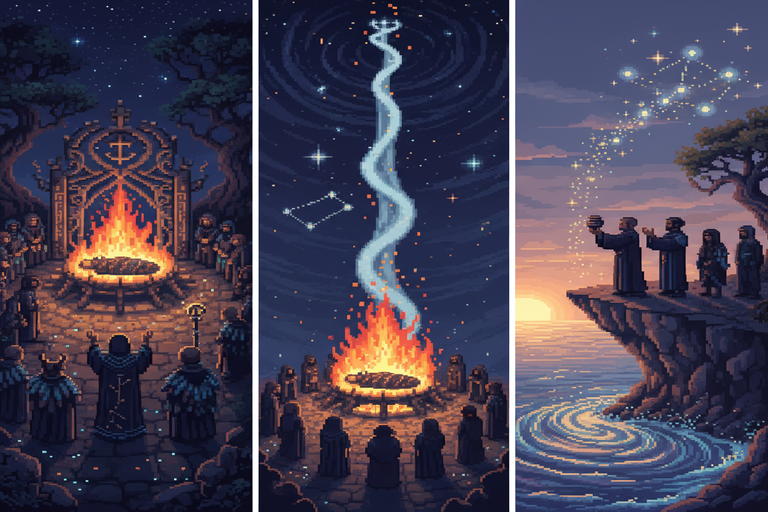 Death and Burial Rituals
Death Rituals
Immediate (Within Hours)
Confirmation: Check for Rot-infection (critical) Clergy Notification: If available (priest attends) Body Preparation: Washing, wrapping, prayers Family Gathering: Immediate kin notified
If Rot-Infected
Immediate Cremation: No ceremony (safety priority) Ashes Disposed: Not kept (corruption risk) Minimal Mourning: Public health over ritual Tragedy: Denied proper burial
Funeral Ceremonies
Standard Service (1-2 Days After Death)
Location: Chapel, home, or outdoor space Officiant: Clergy (if available), elder (if not) Attendees: Family, friends, community
Structure: 1. Constellation prayers (deceased’s patron) 2. Life stories (remembrance) 3. Constellation of Memory invocation 4. Final farewell
Duration: 1-3 hours (wealth/status dependent)
Cremation
Universal Practice: All bodies burned Reasons: - Rot prevention (primary) - Practical (limited burial space on islands) - Spiritual (fire purifies) - Safety (corruption doesn’t spread)
Pyre: Wood (expensive), attended, prayers during
Ashes Disposal
Sky Release (Most Common)
Method: Ashes scattered from ship/platform edge Symbolism: Return to Aether, join sky, freedom Prayer: “Sky gave you breath, sky reclaims you, sky remembers always” Timing: Dawn or dusk (symbolic transitions)
Kept Ashes (Wealthy/Sentimental)
Urns: Small portion kept (family altar) Risk: Rot contamination concern (minimal but feared) Status: Wealth symbol (can afford urn) Controversy: Some clergy discourage (Rot paranoia)
Mourning Customs
Immediate Family
Duration: 30 days formal mourning Clothing: Dark colors, simple Behavior: Subdued, avoid celebrations Support: Community provides meals, labor, presence
Extended
Duration: No formal period (grief varies) Memorial: Annual remembrance (Remembrance Day) Continuation: Life continues (survival demands it)
Constellation-Specific Variations
Constellation of Memory: Emphasis on stories, preservation The Abyss: Acceptance focus, peaceful endings Light: Hope for departed, belief in transcendence Serpent (forbidden): Transformation view, not true death
Special Cases
Lost at Sea (Air)
No Body: Memorial service only Symbolic: Object representing deceased burned Grief: Harder (no closure, no ashes) Frequency: Common (pilots, accidents)
Mass Casualties
Efficiency: Multiple cremations simultaneously Communal: Shared grief, combined ceremony Trauma: Overwhelming (plague, Rot outbreak, disaster)
Rot-Beast Victims
Horror: Bodies often irrecoverable Service: Symbolic (assume death) Stigma: Transformation shame (families traumatized) Support: The Remembrance specializes in helping
Children’s Deaths
Heartbreak: Too common (high mortality) Special Care: Extra gentleness, community support Small Urns: Often kept (parents can’t let go) Grief: Prolonged, profound
Cultural Variations
Ironhold (Military)
Honors: Medals, formal ceremony, military presence Efficiency: Less sentiment, more procedure Hierarchy: Rank determines ceremony scale
Murky Chasm (Pragmatic)
Minimal: Quick cremation, brief mourning Survival: Can’t afford extended grief Community: Still present (shared struggle bonds)
Storm-Sailors (Traditional)
Sky Burial: Body wrapped, released from altitude (falls to depths) Clan Songs: Ancient funeral chants Integration: Deceased joins sky permanently
The Remembrance Support
Organization: Grief support group Services: - Counseling (shared experience) - Practical help (funeral arrangements) - Memorial maintenance (annual ceremonies) - Advocacy (better Rot research = fewer deaths)
Growing: Unfortunately necessary (more deaths yearly)
Philosophy
Orthodox View
Soul: Departs to constellation realm (vague theology) Body: Mortal shell (discarded) Memory: Lives in living (preservation duty) Hope: Reunion (someday, somehow)
Serpent View (Heretical)
Transformation: Death is change, not end Continuation: Consciousness persists (different form) Integration: Join greater whole Orthodox Horror: This is nightmare, not comfort
Costs of Death
Financial
Cremation: 10-50 coins (wood, labor) Clergy: 5-20 coins (donation) Feast: 20-100 coins (if held) Urn: 50-200 coins (if kept) Total: 35-370 coins (significant burden)
Charity: Poor families receive community support
Emotional
Grief: Universal, profound Trauma: Especially violent deaths Guilt: Survivors question (could I have prevented?) Exhaustion: Mourning is work
Social
Obligations: Attending funerals (community duty) Support: Providing meals, labor, presence Remembrance: Speaking names annually Burden: Shared (everyone mourns together)
Related Topics
- Constellation of Memory - Remembrance
- Constellation of the Abyss - Peaceful death
- The Remembrance - Support group
- Festivals - Remembrance Day
- The Rot - Why cremation necessary
- Superstitions - Death-related beliefs
In-World Documents
Funeral Prayer (Common)
Memory Eternal, hear their name.
[Name spoken]They lived. They loved. They mattered.
Do not let them fade into the void.We commit their body to fire.
We commit their ashes to sky.
We commit their memory to our hearts.Until we join them,
Until the stars themselves forget to shine,
Memory eternal.
Mourner’s Journal
Attended three funerals this month. Three.
Mara (Rot), Darius (fell), Old Kellan (age—rare).
I’m tired of burning people I love.
But what choice do we have? The Rot won’t let us bury them. The Aether is all we have.
So we burn. We scatter. We remember.
And we keep living.
Because they would want us to.
I hope.
“Death in the Aetherium is common, constant, and unavoidable. We
burn our dead because the Rot won’t let us bury them. We scatter their
ashes because the Aether is all
we have. We remember them because forgetting would be second death. And
we keep living because that’s what the dead would want. Every funeral is
reminder: life is brief, death is certain, and all we can do is honor
those who came before and try to be worth remembering when our time
comes.”
—From Cultural Practices of the Aetherium by Scholar Evian