Hospice of Final Rest
“Where Endings Find Peace”
“You are dying. This is truth. Here, we do not fight it. Here, we
make peace with it.”
—Inscription at the entrance
Quick Reference
| Attribute | Details |
|---|---|
| Location | Murky Chasm, western district |
| Region | The Murky Depths |
| Size | 2 hectares (building and grounds) |
| Population | 30 staff, 40-60 patients (capacity 80) |
| Government | Administered by Constellation Clergy (Abyss branch) |
| Primary Faction | Constellation of the Abyss clergy |
| Purpose | End-of-life care, hospice for terminal patients |
| Founded | Year 78 S. (209 years ago) |
| Notable Feature | Only hospice that accepts Stage 3 Rot patients |
| Rot Status | Accepts Rot-infected (controversial) |
| Atmosphere | Peaceful, accepting, melancholic |
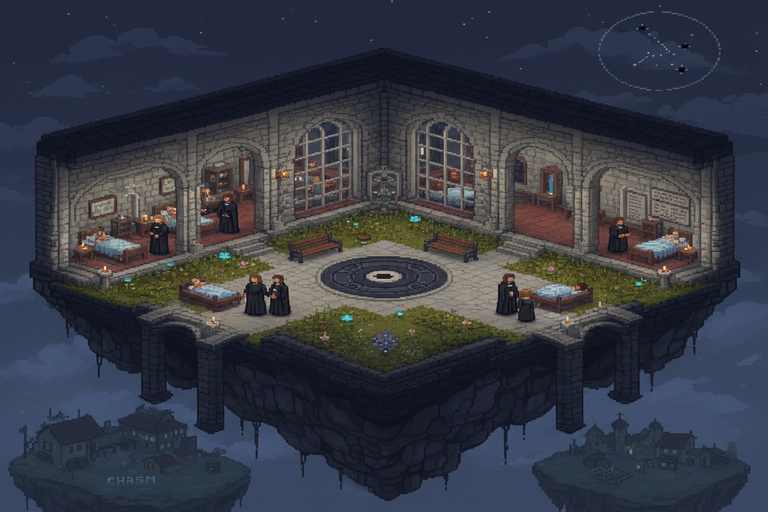 Hospice of Final Rest
Table of Contents
- Overview
- History and Founding
- Architecture and Layout
- Key Locations
- Services Provided
- Staff and Organization
- Patient Population
- Daily Operations
- The Void-Walker Approach
- Controversies
- Cultural Significance
- Current Situation (287 S.)
- Quest Hooks
- Related Topics
- In-World Documents
Overview
The Hospice of Final Rest is the primary temple and care facility of the Constellation of the Abyss, a place where the dying come to make peace with death. Located in Murky Chasm, it is the only hospice in the Aetherium that accepts Stage 3 Rot-corrupted patients—those whom orthodox clergy have abandoned as beyond hope.
This is not a place of false hope or desperate treatment. The Hospice does not promise cures. It does not fight death. It accepts death as inevitable and focuses instead on making the ending as peaceful, dignified, and pain-free as possible. For the terminal, the suffering, the Rot-corrupted beyond cure, it offers what orthodox medicine cannot: acceptance, compassion, and peace.
Founded in Year 78 S. by Sister Kara the Accepting (not to be confused with Brother Kael who later built the Falling Platforms), the Hospice has cared for over 3,000 dying patients in its 209-year history. It is run by Void-Walker Mara Restgiver, who has personally helped 200+ people die peacefully and is exhausted but continues because, as she says, “Someone has to witness their endings. Someone has to tell them it’s okay to let go.”
The Hospice is controversial. Orthodox Constellation Clergy criticize it for “giving up” on patients. Ironhold considers it a death cult facility. Families struggle with the decision to bring loved ones here, knowing they will not return. But for those facing inevitable death, especially Rot-corrupted patients whom no one else will treat, the Hospice offers something precious: dignity in dying.
History and Founding
Sister Kara the Accepting (Year 78 S.)
Background: - Void-Walker priest of the Constellation of the Abyss - Worked as healer in Murky Chasm - Witnessed countless people dying in agony - Orthodox clergy refused to treat terminal cases (resources wasted on hopeless) - Dying patients abandoned, suffering alone
Her Vision: - “Death is inevitable. Fighting it causes suffering. But we can make it peaceful.” - Built hospice dedicated to end-of-life care - Focus on pain management, emotional support, spiritual peace - Accept death, don’t fight it - Dignity in dying
Foundation (Year 78 S.): - Purchased land in western Murky Chasm - Built simple but comfortable facility - Recruited Void-Walker clergy - Opened doors to terminal patients - Free care (funded by donations)
First Patient (Year 78 S.): - Elderly woman, terminal illness, in constant pain - Orthodox clergy refused treatment (too far gone) - Sister Kara accepted her - Provided pain relief, emotional support, spiritual counseling - Woman died peacefully after three weeks - Family grateful
Reaction: - Some praised compassion - Others criticized “giving up” - Orthodox clergy disapproved but didn’t interfere - Established precedent
Early Years (Year 78-100 S.)
Growth: - Word spread (place where dying are honored) - More patients came - More Void-Walkers joined - Facility expanded
Rot-Corruption Decision (Year 89 S.): - First Stage 3 Rot patient requested admission - Orthodox clergy refused to treat (too dangerous, too hopeless) - Sister Kara accepted (they’re dying, they deserve care) - Controversial but defended - Established Hospice as place for Rot-corrupted
Sister Kara’s Death (Year 102 S.): - Died peacefully at age 73 - In her own Hospice - Surrounded by clergy she trained - Considered saint by Abyss worshippers
Middle Period (Year 100-200 S.)
Expansion (Year 134 S.): - Facility doubled in size - Capacity increased to 80 patients - More staff hired - Gardens added
The Great Schism Impact (Year 156 S.): - When Serpent worship was banned, Abyss came under scrutiny - Some wanted to close Hospice (death cult accusations) - Orthodox clergy defended it (legitimate end-of-life care) - Survived but with increased oversight
Reputation Solidified (Year 180 S.): - 2,000+ patients cared for - Proven track record - Respected even by critics - Model for end-of-life care
Modern Era (Year 200-287 S.)
Mara Restgiver Takes Over (Year 267 S.): - Previous administrator died - Mara appointed (age 35 at time) - Has led for 20 years - Exhausted but dedicated
Increased Demand (Year 270-287 S.): - More Rot-corruption (more terminal patients) - Hospice at capacity constantly - Waiting list of 30-40 people - Staff stretched thin
Current Status (Year 287 S.): - 209 years old - 3,000+ patients cared for - Respected but controversial - Essential service - Struggling with demand
Architecture and Layout
Main Building
Design Philosophy: - Open, airy (not claustrophobic) - Natural light (large windows) - Simple but comfortable - Peaceful atmosphere - Minimal barriers (accepting void, not fearing it)
Structure: - Two-story stone building - 40 patient rooms (single occupancy) - Common areas - Staff quarters - Chapel to Abyss - Medical facilities - Kitchen and dining
Materials: - Gray stone (calming, neutral) - Wood accents (warmth) - Large windows (connection to outside) - Minimal decoration (focus on peace, not distraction)
Patient Rooms
Features: - Single occupancy (privacy, dignity) - Large window (view of sky/void) - Comfortable bed - Seating for visitors - Personal altar (any constellation welcome) - Bell to call staff
Atmosphere: - Peaceful, quiet - Clean, well-maintained - Personalized (patients can bring belongings) - Dignified
Accommodations: - Pain medication available - Assistance with daily needs - Emotional support - Spiritual counseling
The Void Garden
Description: Central courtyard garden designed for meditation and acceptance.
Features: - Black stone meditation circle (symbolizing Abyss) - Empty space at center (void) - Benches for contemplation - Peaceful plants (void-lotus, calm-moss) - Gentle water feature - View of sky
Purpose: - Meditation on mortality - Acceptance practice - Peaceful contemplation - Connection to Abyss constellation
Usage: - Patients spend time here daily (if able) - Families meditate - Staff find peace - Most sacred space in Hospice
The Letting Go Chamber
Description: Private room for families to say goodbye.
Features: - Comfortable seating - Tissues, water - Privacy - Soft lighting - Abyss symbols - Grief counselor available
Purpose: - Final goodbyes - Family processing - Emotional release - Supported grieving
Protocols: - No time limit - Staff available but not intrusive - Respect for grief - Compassionate support
The Chapel of the Void
Description: Sacred space dedicated to Constellation of the Abyss.
Features: - Black circle on floor (Abyss symbol) - Minimal decoration (void is empty) - Seating for 50 - Altar with black candles - Window facing where Abyss “constellation” is
Services: - Daily prayers - Death rituals - Memorial services - Meditation sessions
Atmosphere: - Profound peace - Sacred silence - Acceptance of endings - Connection to divine
Memorial Wall
Description: Wall inscribed with names of all who died at Hospice.
Contents: - 3,000+ names - Dates of death - Brief epitaphs (if family provided) - Abyss blessing
Significance: - Honor the dead - Remember them - Comfort to families - Proof that they mattered
Maintenance: - Updated regularly - Well-maintained - Visited by families - Sacred space
Key Locations
The Peaceful Passing Room
Description: Special room for final moments, designed for maximum peace.
Features: - Extremely comfortable bed - Soft lighting (adjustable) - Gentle music (optional) - Incense (calming scents) - View of void/sky - Space for family
Purpose: - Where patients die - Optimized for peaceful death - Void-Walker present - Family welcome
Protocol: - Patient moved here when death is imminent (hours/days) - Void-Walker stays with them - Family can stay as long as desired - Pain management priority - Peaceful, dignified ending
The Grief Counseling Rooms
Description: Private spaces for family emotional support.
Staff: 3 grief counselors (Void-Walkers trained in counseling)
Services: - Processing loss - Acceptance guidance - Emotional support - Practical advice (funeral arrangements, etc.) - Ongoing support (after death)
Approach: - Non-judgmental - Compassionate - Acceptance-focused - Realistic (death is real, grief is valid)
The Medicine Room
Description: Storage and preparation area for pain management medications.
Contents: - Void-lotus extract (powerful painkiller) - Calm-moss tincture (anxiety relief) - Sleep-inducing herbs - Other palliative medications
Staff: 2 medicine-keepers (trained in palliative care)
Philosophy: - Pain relief is priority - Comfort over cure - Dignity in dying - No suffering necessary
The Staff Quarters
Description: Living spaces for 30 permanent staff.
Features: - Private rooms - Common area - Kitchen - Meditation space - Support resources
Significance: - Staff live on-site (24/7 care) - Community of caregivers - Mutual support essential - Emotional toll is high
Services Provided
Pain Management
Priority: No patient should die in agony
Methods: - Void-lotus extract (extremely effective, expensive) - Other herbal painkillers - Comfort measures (positioning, massage, etc.) - Spiritual pain relief (acceptance reduces suffering)
Approach: - Aggressive pain control - Patient comfort over all else - No concern about addiction (they’re dying) - Dignity matters more than alertness
Success Rate: 95% of patients die pain-free or minimal pain
Emotional Support
Services: - Daily visits from Void-Walkers - Grief counseling - Acceptance guidance - Companionship (no one dies alone)
Approach: - Listen without judgment - Validate feelings - Guide toward acceptance - Provide comfort
Staff Training: All Void-Walkers trained in emotional support
Spiritual Counseling
Focus: Making peace with death
Methods: - Abyss theology (acceptance of endings) - Meditation practices - Prayer and ritual - Letting go exercises
Flexibility: - Respect other constellations - Patients can worship as they choose - Abyss philosophy offered, not forced - Spiritual freedom honored
Goal: Patient dies at peace, not in fear
Family Support
Services: - Grief counseling - Practical guidance (funeral arrangements, etc.) - Letting Go Chamber access - Ongoing support after death
Approach: - Families are suffering too - Support them through process - Help them say goodbye - Help them continue after loss
Follow-up: Grief counselors available for months after death
Daily Living Assistance
Services: - Bathing, dressing, feeding - Mobility assistance - Comfort measures - Dignity preservation
Staff: 10 care assistants (non-clergy)
Philosophy: Maintain dignity until the end
Staff and Organization
Leadership
Void-Walker Mara Restgiver (Administrator): - Age 55, has led Hospice for 20 years - Personally helped 200+ people die peacefully - Exhausted but continues - Deeply compassionate - Also oversees Platform Seven
The Silent Voice Silas Darkwater (High Clergy Advisor): - Age 73, dying of Rot corruption - Provides spiritual guidance - Will become patient himself soon - Living example of Abyss philosophy
Void-Walker Clergy (15 total)
Roles: - Spiritual counseling - Death vigils - Rituals and prayers - Emotional support - Administrative duties
Training: - 5+ years as Void-Walker - Specialized end-of-life training - Grief counseling certification - Emotional resilience
Rotation: - 6 months at Hospice, 6 months elsewhere - Prevents burnout (somewhat) - Emotional toll is severe
Medical Staff (5 total)
Roles: - Pain management - Physical care - Symptom treatment (not cure) - Comfort measures
Training: - Medical knowledge - Palliative care specialty - Abyss philosophy - Compassion
Approach: Comfort over cure, dignity over treatment
Care Assistants (10 total)
Roles: - Daily living assistance - Feeding, bathing, dressing - Mobility help - Companionship
Training: - Basic care skills - Compassion - Patience - Respect for dying
Significance: Essential for patient dignity
Support Staff (5 total)
Roles: - Cooking - Cleaning - Maintenance - Administration
Importance: Keep Hospice running smoothly
Volunteers (10-15 active)
Roles: - Companionship for patients - Garden maintenance - Administrative help - Whatever is needed
Motivation: - Belief in mission - Personal loss (many had family members here) - Compassion - Service to Abyss
Patient Population
Demographics
Typical Patients: - Stage 3 Rot-corrupted (60%) - Terminal illness (25%) - Elderly in final decline (10%) - Other terminal conditions (5%)
Age Range: - Youngest: 12 (terminal illness) - Oldest: 97 (natural decline) - Average: 58
Length of Stay: - Average: 3-6 weeks - Range: 3 days to 6 months - Some die quickly, others linger
Capacity: 40-60 patients at any time (max 80)
Why They Come
Primary Reasons: - Orthodox clergy won’t treat them (too far gone) - In constant pain (need pain management) - Want to die with dignity - Need emotional/spiritual support - Family can’t care for them - Want to make peace with death
Decision Process: - Usually family decision - Sometimes patient’s choice - Often last resort - Always difficult
Rot-Corrupted Patients
Controversy: Hospice accepts Stage 3 Rot patients (orthodox clergy refuse)
Rationale: - They’re dying anyway - They deserve care - They’re still human - Compassion doesn’t discriminate
Challenges: - Dangerous (corruption spreads) - Disturbing (physical transformation) - Emotionally difficult (watching humanity fade) - Resource-intensive
Protocols: - Isolated rooms (prevent spread) - Extra precautions - Monitoring for transformation - Peaceful death before becoming Rot-Beast (if possible)
Platform Option: - Some Rot patients choose Falling Platforms - Hospice supports this choice - Prevents transformation - Controversial but defended
Daily Operations
Typical Day
Dawn (6:00 AM): - Staff morning prayer - Patient checks - Medication rounds - Breakfast preparation
Morning (6:00 AM - 12:00 PM): - Patient care (bathing, dressing, etc.) - Pain management - Spiritual counseling - Family visits - Garden time (for able patients)
Noon (12:00 PM): - Lunch - Midday prayer - Rest period
Afternoon (12:00 PM - 6:00 PM): - Continued care - Emotional support - Meditation sessions - Family time - Individual counseling
Evening (6:00 PM - 9:00 PM): - Dinner - Evening prayer - Settling patients for night - Quiet time
Night (9:00 PM - 6:00 AM): - Night staff on duty (6 people) - Monitor patients - Respond to needs - Death vigils (many die at night) - Peaceful, quiet
Death Protocols
When Death Is Imminent: - Patient moved to Peaceful Passing Room - Void-Walker assigned to stay with them - Family notified - Pain management intensified - Spiritual support provided
At Moment of Death: - Void-Walker present (no one dies alone) - Family present (if they want) - Prayer spoken: “Into the void, into rest, into peace” - Peaceful, dignified
After Death: - Body prepared for cremation (Rot prevention) - Family given time to grieve - Memorial service arranged - Name added to Memorial Wall - Grief counseling offered
Frequency: 2-3 deaths per week (100-150 per year)
The Void-Walker Approach
Philosophy
Core Principles: - Death is inevitable (accept it) - Fighting death causes suffering - Acceptance brings peace - Dying can be dignified - Compassion means witnessing, not preventing
Applied to Care: - Don’t fight death (make it peaceful) - Pain relief priority - Emotional support essential - Spiritual peace matters - Dignity until the end
Acceptance Counseling
Goal: Help patient make peace with death
Methods: - Abyss theology (endings are natural) - Meditation on mortality - Letting go exercises - Honest conversations about death - Validation of fear and grief
Process: - Acknowledge fear (death is scary) - Explore resistance (what are they clinging to?) - Guide toward acceptance (not forcing, guiding) - Support through process - Celebrate when peace is reached
Success: 80% of patients reach acceptance before death
Witnessing
Principle: No one should die alone
Practice: - Void-Walker stays with dying patient - Holds hand, speaks softly, provides comfort - Witnesses their passing - Honors their life - Grieves their loss
Significance: - Profound act of compassion - Emotionally exhausting - Sacred duty - Core of Void-Walker calling
Grief Support
For Patients: - Grief for life ending - Grief for what won’t be - Grief for loved ones left behind - Validation and support
For Families: - Anticipatory grief (before death) - Acute grief (at death) - Ongoing grief (after death) - Long-term support
Controversies
Orthodox Clergy Criticism
Arguments: - Hospice “gives up” on patients - Should fight death, not accept it - Enabling despair - Too close to Falling Platforms (death cult accusations) - Accepting Rot-corrupted is dangerous
Hospice Response: - Not giving up (providing different care) - Fighting hopeless battles causes suffering - Acceptance isn’t despair (it’s peace) - Platforms are separate (though philosophically related) - Rot-corrupted deserve compassion too
Current Status: - Orthodox clergy grudgingly accept Hospice - Recognize it fills gap they won’t - But don’t approve of methods - Uncomfortable truce
The Rot-Corruption Question
Issue: Should Stage 3 Rot patients be accepted?
Arguments Against: - Dangerous (corruption spreads) - Hopeless (they’ll die or transform) - Resources wasted - Staff at risk
Arguments For: - They’re still human - They deserve care - They’re suffering - Compassion doesn’t discriminate
Hospice Policy: Accept them (with precautions)
Reality: - Most controversial aspect - Many Rot patients have nowhere else - Hospice is their only option - Staff accept risk
Platform Connection
Issue: Hospice staff also run Platform Seven
Concern: - Blurred lines between accepting death and enabling suicide - Does Hospice encourage platform use? - Are patients pressured?
Hospice Position: - Platforms are separate - Patients have choice - No pressure either way - Support whatever decision patient makes
Reality: - Some patients do choose platforms - Hospice supports this - Very controversial - Philosophical consistency or dangerous enabling?
Resource Allocation
Issue: Should resources go to dying patients or potentially saveable ones?
Practical Argument: - Limited medical resources - Hospice patients will die anyway - Resources better spent elsewhere
Compassion Argument: - Dying patients deserve care too - Quality of death matters - Society judged by how it treats dying - Resources should serve all
Current Reality: - Hospice funded by donations (not public resources) - But debate continues - Reflects larger question about value of terminal lives
Cultural Significance
For Murky Chasm
Community Asset: - Provides essential service - Cares for community’s dying - Reduces family burden - Source of civic pride
Economic Impact: - Employs 30+ people - Attracts donations - Pilgrims visit - Modest but real
Identity: - Murky Chasm known for tolerance - Hospice is symbol of this - Controversial but defended
For the Aetherium
Model for End-of-Life Care: - First dedicated hospice - Inspired others (few, but some) - Demonstrated palliative care works - Influenced death practices
Theological Impact: - Made Abyss worship more visible - Demonstrated practical application of theology - Shifted some attitudes toward death - Controversy strengthened Abyss community
Social Impact: - Forced conversation about dying - Challenged “fight until the end” mentality - Provided alternative to abandonment - Showed compassion has many forms
For Abyss Worship
Practical Demonstration: - Shows what Abyss philosophy looks like in practice - Not just theology (actual care) - Proves compassion, not nihilism - Strongest argument for Abyss legitimacy
Training Ground: - Where Void-Walkers learn end-of-life care - Develops skills, philosophy, resilience - Produces experienced clergy - Essential for Abyss church
Sacred Space: - Most important Abyss temple - Where constellation’s presence strongest - Pilgrimage destination - Spiritual center
Current Situation (287 S.)
Overwhelming Demand
Statistics: - 40-60 patients at any time (near capacity) - Waiting list of 30-40 people - 2-3 deaths per week (100-150 per year) - Increasing (more Rot-corruption, more terminal cases)
Challenges: - Not enough beds - Not enough staff - Not enough resources - People dying while waiting
Response: - Trying to expand (need funding) - Recruiting more Void-Walkers (difficult) - Increasing efficiency (but quality matters) - Turning people away (heartbreaking)
Staff Burnout
Reality: Witnessing death constantly is devastating
Symptoms: - Compassion fatigue - Emotional exhaustion - Vicarious trauma - Depression - High turnover
Support Systems: - Mandatory rotation (6 months on, 6 months off) - Peer counseling - Mental health resources - Community support
Insufficient: - Burnout still severe - Many leave after 2-3 years - Recruitment difficult - Crisis point approaching
Mara’s Exhaustion
Situation: - Mara Restgiver has led for 20 years - Personally witnessed 200+ deaths - Exhausted, aging (55 years old) - No clear successor
Impact: - Leadership quality declining - Decision-making difficult - Emotional toll visible - Staff worried
Future: - Mara needs to retire (but won’t) - Someone must take over (but who?) - Transition will be difficult - Hospice’s future uncertain
Silas’s Decision
Significance: - Silent Voice Silas Darkwater is dying of Rot - Will become patient at Hospice - Then will use Platform Seven - Massive symbolic impact
Implications: - High clergy dying at Hospice (validates mission) - Using platform (controversial) - Will intensify debates - Historic moment
Quest Hooks
The Admission: Family asks you to help bring dying loved one to Hospice. Transport them (dangerous journey), help them settle in, support family through process. Witness end-of-life care firsthand.
The Volunteer: Hospice needs volunteers (staff overwhelmed). Spend time with patients, provide companionship, help with daily tasks. Confront mortality, process emotions, decide what death means.
The Rot Patient: Stage 3 Rot patient seeks admission (orthodox clergy refused). Help them reach Hospice, deal with dangers of Rot-corruption, witness their final weeks. Watch humanity fade, see compassion in action.
The Protest: Activists planning to protest Hospice (death cult accusations). Defend Hospice (protect patients) or join protesters (legitimate concerns)? Understand both sides, make difficult choice.
The Theft: Someone stealing void-lotus (expensive painkiller). Investigate theft, discover it’s family member trying to help dying relative who can’t afford Hospice. Prosecute or help?
The Vigil: Void-Walker asks you to stand vigil with dying patient (they need support). Spend final hours with stranger, witness their death, process experience. Profound emotional journey.
The Family Conflict: Family divided about bringing member to Hospice. Some support, some oppose (giving up accusations). Mediate conflict, help family decide. No right answer.
The Burnout Crisis: Multiple Void-Walkers suffering severe burnout (threatening to quit). Help them process trauma, find support, decide if they can continue. Mental health support quest.
The Expansion Campaign: Hospice needs funding to expand (waiting list is 40 people). Raise money, convince donors, navigate politics. Success means more beds, failure means more people die waiting.
The Cure Rumor: Researcher claims breakthrough in Stage 3 Rot treatment. If true, Hospice’s Rot patients could be saved. Investigate claim, verify research, decide if hope is real or cruel.
The Platform Decision: Patient at Hospice decides to use Platform Seven instead of dying at Hospice. Understand their choice, support them (or try to change their mind), witness decision. Ethical complexity.
The Orthodox Confrontation: Orthodox clergy demand Hospice stop accepting Rot patients (too dangerous). Defend Hospice’s policy (compassion) or support clergy (safety)? Political and ethical battle.
The Successor Search: Mara Restgiver needs successor (she’s exhausted). Help find someone capable, willing, and compassionate enough. Interview candidates, assess qualifications, make recommendation.
The Memorial Vandalism: Someone defacing Memorial Wall (erasing Rot-corrupted names). Find vandal, understand motivation (shame? fear?), decide how to respond. Grief and stigma quest.
The Silas Vigil: When Silent Voice Silas Darkwater becomes patient (future event), spend time with him. Learn from high clergy facing death, witness his acceptance, attend his platform falling. Historic moment.
Related Topics
- Constellation of the Abyss - The deity whose philosophy guides Hospice
- Falling Platforms - Related controversial sites
- Murky Chasm - Settlement where Hospice is located
- Death & Burial - Cultural practices around death
- Rot Stages - Stage 3 patients often come here
- Constellation Clergy - Religious organization (complicated relationship)
- Medicine and Healing - Medical context
In-World Documents
Inscription at Entrance
TO THOSE WHO ENTER
You are dying.
This is truth.
Here, we do not fight it.
Here, we make peace with it.The Abyss waits for you.
It is not horror.
It is rest.Let go of fear.
Let go of pain.
Let go of clinging.Fall gracefully.
We will be with you.
Sister Kara’s Founding Statement (Year 78 S.)
I built this place because dying people deserve dignity.
Orthodox clergy abandon terminal patients. “Resources wasted on the hopeless,” they say. So the dying suffer alone, in pain, without comfort or care.
This is cruelty.
So I built a hospice. A place where the dying are honored, not abandoned. Where pain is managed, not ignored. Where death is accepted, not fought pointlessly.
We will not cure them. We cannot. But we can make their endings peaceful. We can witness their deaths. We can tell them it’s okay to let go.
This is compassion. This is what the Abyss teaches. This is what humanity should do.
Judge me if you want. But I will continue until I die. And when I die, I will die here, in this place, proving that what we offer is real.
Void-Walker’s Prayer (Before Death Vigil)
Abyss, I stand vigil with this soul.
They are dying.
I cannot save them.
I can only witness.Grant them peace in their ending.
Grant them release from suffering.
Grant them courage to let go.Grant me strength to witness.
Grant me compassion to comfort.
Grant me peace to continue.Into the void, into rest, into peace.
Patient’s Testimony (Year 285 S.)
I came here to die.
I have Stage 3 Rot. Orthodox clergy refused to treat me. My family couldn’t care for me. I was in constant pain.
I thought I’d die alone, in agony, afraid.
But here… here they care. They manage my pain. They sit with me. They tell me it’s okay to be scared. They tell me it’s okay to let go.
I’m still dying. But I’m not suffering. I’m not alone. I’m not afraid.
This place is a gift. And when I die—soon, I think—I’ll die peacefully. Because of them.
Thank you.
Family Member’s Letter (Year 286 S.)
Dear Hospice of Final Rest,
My father died in your care last month. He had Stage 3 Rot. He was in constant pain. We couldn’t help him.
Bringing him to you was the hardest decision of my life. It felt like giving up. It felt like abandoning him.
But you didn’t abandon him. You cared for him. You managed his pain. You sat with him. You helped him make peace with dying.
And when he died, he died peacefully. He wasn’t afraid. He wasn’t in pain. He was at peace.
I got to say goodbye. I got to tell him I loved him. I got to hold his hand as he died.
You gave us that. You gave him dignity. You gave us closure.
I will never forget that. Thank you.
Void-Walker Mara Restgiver’s Journal (Year 287 S.)
I’ve witnessed 200 deaths.
Every one stays with me. Every face. Every final word. Every last breath.
I’m exhausted. I’m 55 years old and I feel 80. I dream about death. I carry their grief, their pain, their acceptance.
But I continue. Because someone has to. Someone has to tell them it’s okay to die. Someone has to hold their hand. Someone has to witness.
This is the cost of compassion. And I pay it willingly.
But gods, I’m tired.
I don’t know how much longer I can do this. But I’ll keep going until I can’t. Because they deserve it. Every one of them.
They deserve to die with dignity. And I’ll give them that. No matter the cost.
Orthodox Clergy Criticism (Year 287 S.)
The Hospice of Final Rest is well-intentioned but misguided.
They accept death too easily. They give up on patients who might be saved. They enable despair instead of encouraging hope.
Yes, some patients are truly terminal. Yes, pain management matters. But we should fight until the end, not surrender to the void.
The Hospice’s connection to the Falling Platforms is especially troubling. They blur the line between accepting death and seeking it.
We recognize they provide a service. We acknowledge their compassion. But we cannot endorse their philosophy.
Life is sacred. Even dying life. Even suffering life. We should honor that, not facilitate endings.
“The Hospice is where theology meets suffering. Where acceptance
meets agony. Where compassion means witnessing death, not preventing it.
It’s not for everyone. But for those who need it, it’s
everything.”
—Void-Walker teaching
“I opposed the Hospice for years. Then my mother was dying of Rot. Orthodox clergy
refused to treat her. The Hospice accepted her. She died peacefully. I
was wrong.”
—Former critic
“The Hospice doesn’t give up on people. It gives them something
different: dignity in dying. That’s not giving up. That’s
compassion.”
—Family member