Daily Life
“How People Actually Live in the Shattered World”
“You wake up. You work. You eat if you’re lucky. You sleep if
you’re safe. You hope tomorrow is better. That’s daily life. Simple.
Brutal. Real.”
—Common saying
 Daily Life in the
Aetherium
Daily Life in the
Aetherium
Overview
Daily life in the Aetherium is defined by work, survival, and stolen moments of joy. For most people, existence is a cycle of labor, basic needs, and constant awareness of dangers—the Rot, falls, starvation, violence. There are no lazy days, no guaranteed safety, no retirement plans. You work until you can’t, you survive until you don’t, and you find happiness in small things because large happiness is rare.
But life isn’t only hardship. People laugh, love, celebrate, and dream. Children play despite dangers. Families gather for meals. Friends drink in taverns. Musicians perform. Lovers meet in secret. Life continues not just because it must, but because people refuse to let the Shattering take everything. Daily life is both grinding survival and defiant joy—often simultaneously.
Typical Days by Settlement
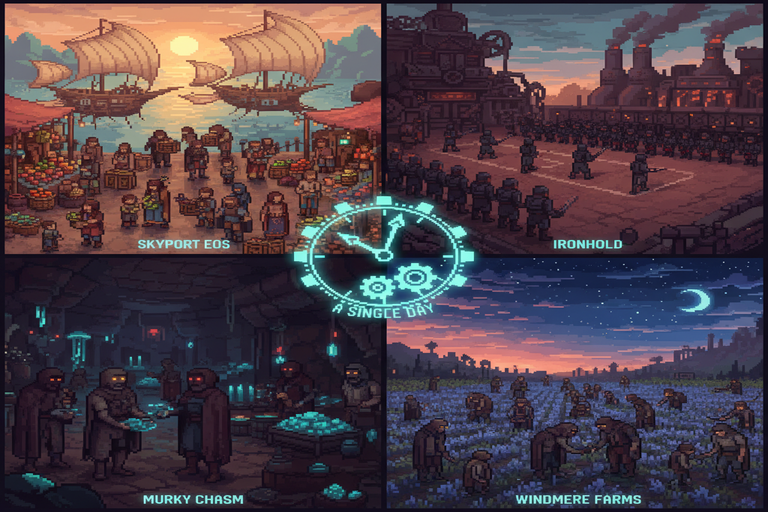
Skyport Eos (Merchant Community)
Dawn (First glow): - Wake at constellation-light - Morning prayers (devout: 30%, quick prayer: 50%, nothing: 20%) - Breakfast: Aether-fish (dried or fresh), grain porridge, weak beer - Children: Fed, sent to work or apprenticeships
Morning (Work begins): - Docks: Loading/unloading ships (irregular schedules) - Market: Merchants set up stalls, haggling begins - Workshops: Craftsmen begin projects - Farms: Tending crops (outskirts) - Homes: Domestic work (cooking, cleaning, childcare)
Midday (Peak activity): - Brief lunch: Bread, cheese, dried fish, water - Market busiest (everyone shopping) - Docks chaotic (ships arriving/departing) - Gossip flows (news spreads) - Heat peaks (Aether luminosity maximum)
Afternoon (Work continues): - Same as morning (but everyone’s tired) - Children: Play if done with work, otherwise keep working - Elderly: Socialize, tell stories, watch children - Repairs: Fix things that broke
Evening (Social time): - Dinner: Family meal (important), stew or grilled fish, bread - Taverns: Fill up (Drifting Cloud especially) - Stories: Told and retold - Music: Spontaneous performances - Lovers: Meet in shadows - Children: Sent to bed (resist)
Night (Rest): - Most sleep (8 hours if lucky, less if worried) - Guards: Patrol (shifts) - Insomniacs: Stare at constellations, worry - Criminals: Operate (darkness provides cover)
Ironhold (Military Settlement)
Dawn (Regimented): - Wake at bell (5:30 AM, no exceptions) - Morning drill (military: mandatory, civilians: encouraged) - Breakfast: Substantial (military rations, civilian varies) - Inspection: Military only, but civilians feel watched
Morning (Productive): - Military: Training, patrols, maintenance - Foundries: Work begins (loud, hot, continuous) - Workshops: Manufacturing (weapons, tools, goods) - Administration: Guild business, paperwork
Midday (Brief rest): - Lunch: Functional (eat quickly, return to work) - Training Grounds: Demonstrations (public watches) - Market: Orderly (fixed prices, no haggling)
Afternoon (Continues): - Same as morning (efficiency valued) - Fatigue sets in (push through it) - Accidents happen (tired workers) - Production continues (forges never cool)
Evening (Controlled): - Dinner: Family or mess hall (military) - Limited social time (curfew exists) - Chapel of Forge: Evening services - Early to bed (tomorrow is same)
Night (Watched): - Sleep (6-8 hours) - Guards: Heavy patrols (security obsession) - Curfew: Enforced (violators questioned) - Resistance: Meets in secret (dangerous)
Murky Chasm (Anarchic)
Dawn (Chaotic): - Wake whenever (no schedule) - Breakfast: If you have food - Check if bridges still standing (they are, usually) - Assess threats (new ones daily)
Morning (Survival): - Work: Whatever pays (smuggling, vending, guarding) - Black Market: Opens (always busy) - Deals: Made in shadows - Violence: Occasional (resolved quickly)
Midday (Active): - Anchor Platform: Busy (meetings, deals, fights) - Abyss Bar: Opens (never actually closes) - Transactions: Money, goods, favors, secrets - Corruption: Accepted (part of life)
Afternoon (Continues): - Same as morning (no structure) - Some sleep (nocturnal lifestyle) - Some work (day jobs) - Flexibility (adapt constantly)
Evening (Social): - Common areas: Fill up - Stories: Darker than elsewhere - Drinking: Heavy (coping mechanism) - Fights: Common (entertainment and danger) - Rot-Touched: Emerge (less hidden at night)
Night (Dangerous): - Sleep: Light (one eye open) - Crime: Increases (darkness provides cover) - Deep Tangle: Active (Rot-Touched community) - Whispers: Audible (Voice Beneath)
Windmere Farms (Agricultural)
Dawn (Early): - Wake before light (farm work) - Breakfast: Substantial (need energy) - Prayers: Forge and Voyager (protect crops and workers) - To fields: Entire family
Morning (Labor): - Farming: Planting, tending, harvesting (seasonal) - Animals: If any (rare, expensive) - Maintenance: Fences, irrigation, tools - Children: Help (essential labor)
Midday (Brief rest): - Lunch: In fields (bread, cheese, water) - Rest: Short (work continues) - Heat: Manage (shade, water)
Afternoon (Continues): - More farming (until dusk) - Processing: Crops (cleaning, storing) - Repairs: Constant (tools, structures) - Exhaustion: Builds (push through)
Evening (Community): - Dinner: Large family meal (important) - Social: Neighbors visit - Stories: Elders tell (oral tradition) - Music: Simple (work songs, folk tunes) - Early to bed (exhausted)
Night (Watch): - Sleep: Deep (exhausted) - Guards: Rotate (Rot-Beast threat) - Worry: About harvest, weather, Rot - Dreams: Of better times (or nightmares)
Work by Profession
Farmers
Hours: Dawn to dusk (12-14 hours) Tasks: Planting, tending, harvesting, maintenance Seasons: Vary (but always work) Pay: Subsistence (keep what you grow) Dangers: Rot-Beasts, crop failure, weather Satisfaction: Low (hard) to high (feeding people)
Craftsmen
Hours: Sunlight-dependent (8-12 hours) Tasks: Creating, repairing, selling Skills: Years to master Pay: Variable (skill-dependent) Dangers: Injuries, economic competition Satisfaction: High (pride in craft)
Merchants
Hours: Market hours (10-12 hours) Tasks: Buying, selling, negotiating, traveling Skills: Haggling, assessment, networking Pay: Variable (luck and skill) Dangers: Theft, competition, travel risks Satisfaction: Moderate (stressful but profitable)
Pilots
Hours: Irregular (when ships fly) Tasks: Navigation, maintenance, loading/unloading Skills: Years of training Pay: Good (dangerous work) Dangers: Crashes, Rot-Beasts, storms, pirates Satisfaction: High (freedom, adventure)
Soldiers/Guards
Hours: Shifts (8-12 hours, rotating) Tasks: Patrols, training, defense, enforcement Skills: Combat, discipline Pay: Steady (reliable) Dangers: Combat, Rot-Beasts, assassination Satisfaction: Moderate (purpose but stress)
Laborers
Hours: Long (12-14 hours) Tasks: Loading, building, cleaning, whatever needed Skills: Minimal Pay: Low (subsistence) Dangers: Injuries, exploitation Satisfaction: Low (survival only)
Food and Meals
Common Foods
Staples: - Aether-fish (dried, smoked, fresh if lucky) - Sky-kelp (dried strips, soup ingredient) - Grain (bread, porridge, beer) - Root vegetables (murk-root if desperate) - Preserved meat (expensive, rare)
Preparation: - Boiling (most common) - Grilling (when fuel available) - Stews (stretch ingredients) - Drying (preservation) - Smoking (fish, meat)
Typical Meals: - Breakfast: Porridge, dried fish, weak beer - Lunch: Bread, cheese, dried kelp - Dinner: Stew or grilled fish, vegetables, bread
Feast Days: - Fresh meat (if available) - Multiple dishes - Ale or wine - Desserts (rare, precious)
Food Costs
Cheap: - Dried sky-kelp: 2 coins per kg - Grain: 5 coins per kg - Murk-root: 3 coins per kg
Moderate: - Fresh aether-fish: 10-20 coins per kg - Bread: 1 coin per loaf - Vegetables: 5-10 coins per kg
Expensive: - Fresh meat: 50-100 coins per kg - Fruit: 20-50 coins per kg - Spices: 100+ coins per small amount
Weekly Food Budget: - Poor family: 20-30 coins (subsistence) - Middle family: 50-80 coins (adequate) - Wealthy family: 200+ coins (variety, quality)
Housing
Wealthy Homes
Structure: Multi-room (4-6 rooms) Materials: Ironwood, stone, quality construction Features: Privacy, comfort, decoration Location: Best areas (secure, central) Cost: 5,000-20,000 coins (purchase) or 50-200 coins/month (rent)
Middle-Class Homes
Structure: 2-3 rooms Materials: Wood, stone, functional Features: Basic comfort, some privacy Location: Decent areas Cost: 1,000-5,000 coins (purchase) or 20-50 coins/month (rent)
Poor Housing
Structure: Single room or shared Materials: Cheap wood, salvaged materials Features: Minimal (shelter only) Location: Edges, poor districts Cost: 200-1,000 coins (purchase) or 5-20 coins/month (rent)
Desperate Conditions
Structure: Caves, ruins, temporary shelters Materials: Whatever available Features: None (survival shelter) Location: Underbelly, ruins, edges Cost: Free (but dangerous, illegal)
Clothing and Fashion
Practical Wear (Most People)
Materials: Wool, canvas, leather, sky-kelp fabric Style: Functional (pockets, durability, weather-appropriate) Colors: Natural (browns, grays, undyed) Repair: Constant (mended until unwearable) Lifespan: Years (clothes are investment)
Status Clothing (Wealthy)
Materials: Fine fabrics, dyed, imported Style: Decorative (but still practical) Colors: Bright (expensive dyes) Quality: New, well-made Statement: “I can afford this”
Work Clothes
Farmers: Tough, stained, patched Craftsmen: Aprons, protective gear Soldiers: Uniforms, armor Pilots: Leather, warm, wind-resistant Clergy: Robes (constellation-specific colors)
Cultural Variations
Bright-Folk: Practical, merchant-style Iron-Blood: Military-influenced, functional Sun-Touched: Colorful (when possible), flowing Veil-Born: Simple, often gray or white Void-Kin: Mix of everything (no distinct style yet)
Hygiene and Health
Bathing
Frequency: Weekly (water precious) Method: Communal baths (settlements) or basins (homes) Water: Cold (usually), warm (luxury) Soap: Basic (lye-based), expensive (scented)
Laundry
Frequency: Weekly or bi-weekly Method: Hand-washing (labor-intensive) Drying: Air-dry (hang on lines) Communal: Often (shared facilities)
Waste Disposal
Settlements: Outhouses, disposal chutes (over edge) Ships: Overboard (into Aether) Murk: Less organized (sanitation poor) Problems: Disease, smell, contamination
Healthcare
Access: Limited (expensive, rare) Methods: Prayer (free), herbs (cheap), physicians (expensive) Quality: Variable (prayer works sometimes, herbs rarely, physicians if skilled) Prevention: Better than cure (can’t afford cure)
Entertainment and Leisure
Taverns (Primary social space)
Functions: - Drinking (ale, weak beer, occasionally wine) - Eating (simple food) - Socializing (news, gossip, friendship) - Music (performances, sing-alongs) - Stories (entertainment and information) - Games (dice, cards, gambling)
Cost: 2-5 coins per evening
Atmosphere: Varies (rowdy, friendly, dangerous)
Examples: Drifting Cloud (Eos), Abyss Bar (Murky Chasm)
Games and Gambling
Dice: Simple, portable, universal Cards: Hand-painted decks (expensive) Board games: Rare (boards are luxury) Gambling: Common (small stakes usually) Children’s games: Tag, hide-seek, cloud-hopper catching
Music and Performance
Frequency: Regular (taverns, festivals, spontaneous) Performers: Sun-Touched (professional), locals (amateur) Instruments: Portable (flutes, drums, strings) Songs: Folk, constellation hymns, work songs, love songs Dancing: Common (festivals, celebrations)
Storytelling
Oral Tradition: Primary entertainment Types: Pre-Shattering tales, hero stories, horror, romance Tellers: Elders, Sun-Touched, anyone with good story Function: Entertainment, education, cultural preservation Participation: Audience interacts (questions, responses)
Children’s Lives
Work (Necessary)
Age 3-6: Simple tasks (fetching, watching, helping) Age 7-11: Real work (farming, errands, apprentice tasks) Age 12-14: Full labor (adult tasks) Age 15+: Adult (marriage, full work, full danger)
Hours: 4-8 hours daily (age-dependent)
Education: While working (apprenticeship model)
Play (Limited but Present)
Games: - Cloud-hopper catching (rarely succeed) - Hide and seek (dangerous near edges) - Tag, races - Dice, simple games - Imagination (free)
Toys: Rare (handmade, treasured)
Supervision: Minimal (parents working)
Dangers: Falls (leading cause of child death), Rot-Beasts, kidnapping, injury
Education
Informal: Learning by doing Apprenticeships: Age 7+ (learn trade) Clergy Schools: Some settlements (reading, writing, religion) Oral Tradition: Stories, songs, knowledge Literacy: 20% overall (higher in wealthy families)
Relationships and Romance
Courtship
Meeting: Work, taverns, festivals, chance Courting: Brief (life is short) Chaperones: Rare (post-Shattering casualness) Approval: Family input (but not required)
Marriage
Age: Young (18-22 common) Ceremony: Simple (clergy or elder officiates) Cost: Minimal (can’t afford elaborate) Purpose: Partnership (survival, children, companionship) Love: Develops (or doesn’t), but marriage happens anyway
Partnerships
Formal Marriage: Common (traditional) Informal Partnerships: Also common (practical) Polygamy: Rare but accepted (some cultures) Same-Sex: Accepted (survival matters more than tradition) Divorce: Possible (mutual agreement or abandonment)
Intimacy
Privacy: Limited (small homes, thin walls) Opportunities: Stolen moments (creativity required) Contraception: Limited (herbs, timing, luck) Children: Often result (not always planned)
Challenges of Daily Life
Constant Threats
The Rot: - Always present (background fear) - Infection risk (any exposure) - Islands falling (long-term dread) - Corruption spreading (inevitable?)
Falls: - Leading cause of death (especially children, drunk adults) - Edges must be watched (constant vigilance) - One moment of carelessness = death - No recovery (fall = gone forever)
Resource Scarcity: - Food: Never abundant - Water: Precious - Fuel: Expensive - Everything: Rationed mentally
Violence: - Crime (theft, assault, murder) - Rot-Beasts (attacks) - Accidents (injuries) - War (potential)
Periodic Crises
Storms: Damage, danger, disruption Crop Failures: Starvation risk Disease Outbreaks: Epidemics Island Instability: Earthquakes, collapses Economic: Shortages, price spikes
Personal Struggles
Illness: Common, treatment limited Injury: Frequent, often permanent Loss: Everyone loses someone Grief: Constant companion Fear: Always present (suppress it or succumb)
Moments of Joy
Despite Everything
Laughter: Still happens (dark humor common) Love: Still blooms (brief, intense) Celebration: Still occurs (festivals, weddings) Music: Still played (defiant joy) Hope: Still exists (stubborn, irrational, necessary)
Small Pleasures
Good Meal: Simple joy (when food is adequate) Safe Night: Sleep without fear (rare, precious) Child’s Laugh: Reminder of innocence Sunrise: Beauty still exists Friendship: Connection matters Achievement: Finished work, solved problem, survived day
Related Topics
- Skyport Eos - Typical settlement
- Ironhold - Military life
- Murky Chasm - Anarchic life
- Windmere Farms - Agricultural life
- Social Structure - How society organizes
- Food and Cooking - What people eat
- Work and Labor - What people do
In-World Documents
A Day in the Life (Farmer’s Journal, 285 S.)
Woke before dawn. Back hurts. Always hurts.
Breakfast: Porridge. Again. Always porridge.
Fields: Planted north section. Rot-Beast tracks nearby. Worried.
Lunch: Bread, cheese. Ate in field. No time to return home.
Afternoon: More planting. Son helped. He’s getting strong. Pride mixed with sadness (he should be playing, not working).
Dinner: Family. Stew (mostly vegetables, little fish). Wife made it stretch. She’s good at that.
Evening: Too tired for tavern. Told children story instead. They fell asleep. I envied them.
Now: Writing this. Don’t know why. Tomorrow is same. Day after is same. Until harvest. Or until Rot comes. Whichever first.
But we’re alive. That’s something.
Tavern Conversation (Overheard)
“How was your day?”
“Worked. Survived. You?”
“Same. Drink?”
“Yeah. Drink.”
[That’s most conversations. Simple. Honest. Enough.]
“Daily life in the Aetherium is work, survival, and stolen
moments of joy. You wake up not knowing if today is the day your island
falls, if today is the day the Rot comes, if today is the
day you fall off an edge. But you wake up anyway. You work anyway. You
find reasons to smile anyway. Because that’s what it means to be human:
refusing to let the world—even a shattered, dying world—take everything
from you. We work. We survive. We laugh when we can. We love when we
dare. We hope when we shouldn’t. That’s daily life. That’s
enough.”
—From Life in the Aetherium by Historian Elias Stormchaser