Murk-Crawler
Scolopendra corruptus / “Cave Centipedes” / “The Burrowers”
“Found a nest in the grain storage. Fifty of them, each as long
as my arm. Took three days and a lot of fire to clear them
out.”
—Windmere farmer’s report
Quick Reference
| Attribute | Details |
|---|---|
| Type | Insectoid (Giant centipede) |
| Rarity | Common (increasing in settled areas) |
| Habitat | Caves, underground passages, grain storage, ruins |
| Danger Level | Moderate (CR 2-4, ambush predator) |
| Size | Large (2-3m long, 20cm diameter) |
| Weight | 15-30kg |
| Diet | Carnivore (anything smaller, including humans) |
| Intelligence | Low (instinctive) |
| Aggression | High (territorial, hungry) |
| Lethality | Moderate (venomous bite, ambush tactics) |
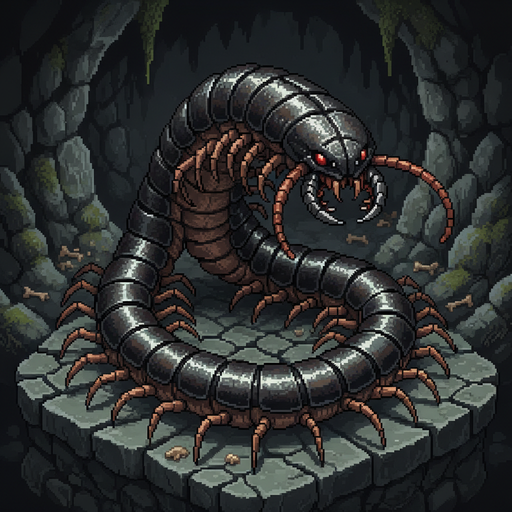 Murk-Crawler - Cave
Centipede
Murk-Crawler - Cave
Centipede
Description
Murk-crawlers are giant centipede-like creatures that have adapted to the post-Shattering world with remarkable success. Unlike many creatures, they seem largely resistant to Rot-corruption, their chitinous armor providing natural protection. They’re ambush predators that burrow through soil and stone, waiting for prey to pass overhead before erupting from below with devastating speed.
The creatures are 2-3 meters long with segmented bodies covered in black-brown chitin plates. Dozens of legs propel them with surprising speed, and their mandibles can crush bone. Most dangerous is their venom—a paralytic toxin that immobilizes prey while the murk-crawler feeds. They’re not intelligent, but they’re effective hunters that have become a persistent problem in settled areas.
What makes murk-crawlers particularly troublesome is their tendency to nest in human structures. Grain storage caves, underground passages, and ruins provide ideal habitat. A single breeding pair can produce dozens of offspring, and clearing an established nest is dangerous, expensive work that requires fire and courage.
Physical Characteristics
Appearance
Body: - Segmented (20-30 segments) - Chitinous armor (black-brown) - 2-3 meters long - 20cm diameter - Flexible but armored
Head: - Large mandibles (crushing power) - Multiple eyes (compound, poor vision) - Antennae (primary sense) - Venom glands (visible when feeding)
Legs: - Dozens of pairs - Sharp claws - Fast movement - Can climb walls
Chitin: - Corruption-resistant - Hard (deflects blades) - Segmented (flexibility) - Valuable (armor crafting)
Behavior and Hunting
Ambush Tactics
Burrowing: - Digs through soil/soft stone - Creates tunnel networks - Waits underground - Senses vibrations
The Strike: - Erupts from below - Mandible strike first - Venom injection - Drags prey underground
Feeding: - Paralyzes prey - Feeds slowly - Returns to nest - Stores excess food
Nesting
Nest Location: - Dark, enclosed spaces - Caves preferred - Grain storage (warmth) - Ruins (shelter)
Nest Structure: - Central chamber - Multiple tunnels - Egg chamber (separate) - Food storage
Colony Size: - Breeding pair + offspring - 10-50 individuals - Territorial (defend nest) - Aggressive when threatened
Combat Abilities
Attacks
Venomous Bite: - Mandible crush + venom - Paralytic toxin - Progressive (worsens over time) - Treatable (if quick)
Mandible Crush: - Powerful bite - Breaks bone - No venom (pure damage) - Quick strikes
Burrow Ambush: - Surprise attack - From below - Difficult to defend - Knockdown effect
Defenses
Chitin Armor: - Deflects blades - Corruption-resistant - Segmented (flexible) - Weak points (joints)
Speed: - Fast (for size) - Agile - Can climb - Difficult to escape
Burrowing: - Escape underground - Ambush from below - Difficult to pursue - Tactical advantage
Weaknesses
Fire: - Chitin burns - Nest vulnerable - Effective deterrent - Best weapon
Crushing Weapons: - Hammers, maces - Break chitin - More effective than blades - Recommended
Loud Noise: - Disorients - Disrupts hunting - Temporary effect - Tactical use
The Venom
Effects
Immediate (Minutes 1-10): - Numbness at bite site - Spreading paralysis - Difficulty moving - Panic
Progressive (10-30 minutes): - Full paralysis - Conscious but immobile - Breathing difficult - Terror
Treatment: - Immediate: Tourniquet (if limb) - Early: Antivenom (alchemical) - Late: Prayer - Prevention: Don’t get bitten
Materials (If Killed)
Chitin Plates: - Value: 10-30 coins per plate - Uses: Armor crafting (light, strong) - Rarity: Common (if you kill them) - Quality: Varies by age
Venom Sacs: - Value: 20-50 coins - Uses: Alchemy, poison crafting - Rarity: Uncommon (must extract carefully) - Danger: Handling risk
Mandibles: - Value: 5-15 coins - Uses: Decorative, trophies - Rarity: Common - Quality: Trophy value
Cultural Impact
In Settlements
Pest Problem: - Infest grain storage - Dangerous to farmers - Expensive to clear - Constant vigilance
Extermination: - Professional hunters - Fire essential - Dangerous work - Good pay
Prevention: - Sealed storage - Regular inspections - Traps - Vigilance
In Stories
Horror Tales: - “The thing in the cellar” - “Buried alive” - Children’s nightmares - Effective warnings
Practical Wisdom: - “Check before you dig” - “Fire kills crawlers” - “Never alone in caves” - Survival advice
Related Topics
- Windmere Farms - Common habitat
- Northern Cliffs - Cave systems
- Pest Control - Professional hunters
- Chitin Armor - Crafted from plates
In-World Documents
Pest Control Contract
MURK-CRAWLER INFESTATION
Location: Windmere grain storage, cave system 3
Estimated population: 30-50 individuals
Threat level: High (breeding pair confirmed)
Payment: 200 coins + materials
Requirements: - Fire equipment essential - Minimum 3 hunters - Cave experience required - Antivenom on hand
Contact Elder’s office for details.
Farmer’s Warning
To new settlers:
Murk-crawlers are real. They’re dangerous. They will nest in your storage if you let them.
Prevention: - Seal all underground spaces - Inspect regularly - Don’t ignore vibrations - Keep fire handy
If you find one, don’t fight it alone. Get help. These things kill.
If you find a nest, evacuate and call professionals. Trying to clear it yourself is how people die.
Learn from our mistakes. Stay safe.
“Murk-crawlers are proof that not everything dangerous in the
Aetherium is corrupted. Sometimes nature is scary enough on its own.
They’re fast, venomous, armored, and they hunt in packs. The only good
news is they’re not smart. Use fire, use crushing weapons, and don’t go
into caves alone. That’s how you survive murk-crawlers. That’s how you
survive, period.”
—Pest hunter’s advice